Philanthropy that holds itself accountable

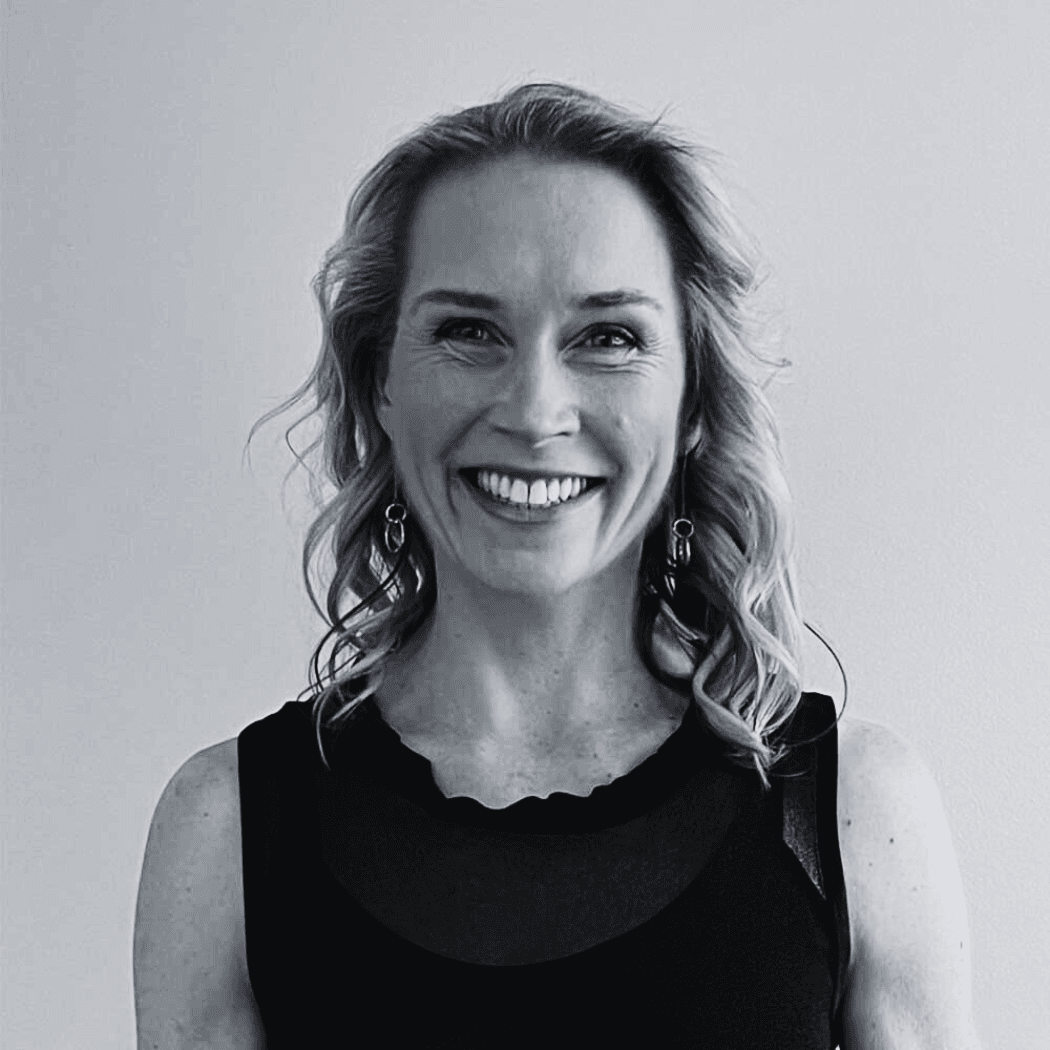
Menzies Foundation CEO Liz Gillies – in her capacity as Honorary Fellow, Asia Pacific Social Impact Centre, University of Melbourne – has led the development
of the Philanthropy Impact Pioneers Program (PIPP) in collaboration with 10 other philanthropic funders. Over the next three years, this consortium
of funders will explore the big social impact questions to develop their own practice and share learnings with the sector.  The PIPP was officially
launched on 27 November 2018 by Philanthropy Australia CEO Sarah Davies. 


The following story, written by Nicole Richards, was published by Philanthropy Australia on
Stories in philanthropy

Philanthropy that holds itself accountable: Philanthropic Impact Pioneers 

The Philanthropy: Towards a Better Practice Model report, released in May this year by the Asia Pacific Social Impact Centre, provided some unflattering feedback to Australian funders.

Key among the report’s findings was a disconnect between grant seeker and grant maker perceptions about funding practices, impact and the health of their
relationships.

“The report showed huge differences to the extent to which non-profits feel they can have open conversations with philanthropists,” explains report co-author
and Menzies Foundation CEO, Liz Gillies.

“There were massive discrepancies in what non-profits were seeking and what philanthropists were funding, and there was a huge issue around evaluation.

“Most of these issues stem from the fact that nothing holds philanthropy to account.”

Ms Gillies felt compelled to take action. In March this year she began developing the Philanthropic Impact Pioneers Program (PIPP) – a direct response
to the reported lack of confidence by philanthropic funders in their ability to develop social impact frameworks that would help assess the true impact
of their work.

“Among the research findings only 22 per cent of philanthropic respondents indicated that they had a social impact framework that provided insights on
the impact of their practice models,” Ms Gillies says.

“Very often there are conversations happening within foundations, especially among a foundation’s professional staff, about the need to identify the data
and metrics that will help them develop their strategy, but these are complex and nuanced questions.”

“As I started reflecting on these questions at the Menzies Foundation, I realised that there was something to be said about creating a shared, safe platform
to explore these conversations,” Ms Gillies continues. “Everyone’s on their own journey, working with different experts and I thought wouldn’t it be
great to bring all of that expertise into a shared space?”

“So, what started as one foundation’s desire to be rigorous in how it held itself to account evolved with the realisation that going on that journey with
others would open up a rich and wonderful learning environment.”

Ms Gillies says the Philanthropic Impact Pioneers Program is designed to draw out the nuanced conversation about impact, using data “to define and understand
where we sit, using everyone’s shared desire to make an impact to guide us and create a space in which we can learn and improve.”

A consortium of 10 philanthropic funders including Australian Communities Foundation, Australia Post, Besen Foundation, Equity Trustees, Fay Fuller Foundation,
Ten20 Foundation and Menzies Foundation have signed on to participate in the three-year program, which launched on November 27.

“These people who’ve joined the consortium, aren’t just doing it for themselves,” Ms Gillies says. “They’re making a very significant contribution to the
sector because the project is linked to a research team at the Centre for Social Impact and we will be codifying our findings and sharing them with
the sector with the genuine hope to have a conversation about where philanthropy finds itself.”

“We’ve got a great group with some really diverse points of view,” Ms Gillies continues.

“What’s exciting is that we’ll be addressing these challenges as a cohort with shared values and, with guidance from some of the world’s leading impact
experts, we will develop approaches that will benefit not only individual organisations in the program cohort, but also the sector as a whole.”

The opportunity to collaborate with, and learn from, peers underpinned the Besen Family Foundation’s
decision to take part in the program.

“We’re very interested in collaborating with other foundations through the Impact Pioneer Program to consider the impact of granting in response to open
grant rounds and programs as well as long-term partnerships with organisations,” says Besen Family Foundation CEO, Tabitha Lovett.

“In the past 10 years, evaluation and impact measurement has gained momentum in the philanthropy sector and it has shifted the conversation from asking
‘What causes and organisations should we support?’ to ‘What is shifting as a result of philanthropic support?’ and ‘How do we get better at using that
information to inform future granting and refine strategy and focus?’”

For Maree Sidey, CEO of Australian Communities Foundation, being able to confidently articulate impact
was a key motivator for participating in the program.

“At this time, more than ever, there are many so pressing issues to tackle,” she says. “It’s important to be able to tell a compelling impact story that
is coherent, has authenticity and includes the voices of those we partner with.”

Ms Gillies is confident that the program’s rigorous interrogation of impact will help break down the silos in which funders often find themselves working.

“I think this is about genuinely wanting to collaborate in a way where ego becomes secondary to the desire to make a difference and have an impact,” Ms
Gillies says.

For more information about the Philanthropic Impact Pioneers Program please contact Liz Gillies at liz.gillies@menziesfoundation.org.au

Natasha Eskinja

Digital Communications Coordinator

Natasha is driven by a profound passion for both creativity and analytics, a synergy that fosters authentic storytelling in the digital realm with both innovation and integrity. 

Throughout her career, she has consistently integrated the overarching marketing and communications narrative with the emotional connections of audiences. She is currently pursuing a Certificate in Society and the Individual from Flinders University, furthering her exploration of human behaviour and the critical importance of connectedness between organisations, individuals, and communities.

LinkedIn | natasha.eskinja@menziesfoundation.org.au

Sarah Jenkins

Strategic Communications Manager

Sarah has more than 18 years’ experience in communications and marketing leadership across a range of sectors.

Communications strategy and organisational growth is a continuing theme in Sarah’s career. Most recently, she leads the development of a Leadership Movement, evaluated by Menzies Viral Co-efficient Model; a contribution to the NFP. 

Sarah’s early career centred around best practice in marketing and communications which later culminated into the establishment of her very own agency. This work extensively spanned across PR, traditional media, event management, strategy, digital marketing, graphic design and business development consultancy. 

In 2019, Sarah joined the lean and robust team at the Menzies Foundation. She has since crafted the Foundation’s narrative and communication strategy. The development of this strategic communications platform is essential for ‘movement building’ and requires a strong strategic, management and communication skills set. Sarah has brought so much to this important work, which sits at the forefront of communication practice. 

Sarah continues to contribute to the NFP sector through her commitment to Purpose; as she reflects on her own leadership, builds her own leadership capability and contributes to the greater good. 

LinkedIn | sarah.jenkins@menziesfoundation.org.au | 0401 880 071

Rohan Martyres

Director, Strategy and Partnerships

Rohan has 15 years’ experience in facilitating cross-sector collaborations to address complex social and health challenges.  He has worked with the World Economic Forum in Australia, led an international conflict resolution field team in Nepal, and directed a 10-year £40m initiative to reduce health inequity in London.

Most recently, Rohan was Major Grants Development Manager at the Ian Potter Foundation.  He refined the foundation’s major grants strategy, and co-developed a series of large scale initiatives, including joint philanthropic-government funding for a new national organization to support place-based approaches across Australia.

Rohan has held several non-executive roles, including with an international NGO and with London Funders, the peak body of independent foundations in London.  He holds several qualifications including a graduate degree in innovation and strategy from the Judge Business School, University of Cambridge.

When Rohan isn’t exploring Melbourne’s creeks with his partner and 6yo daughter, he’s working on his currently weak Australian accent (after 15 years in the UK).

LinkedIn | rohan.martyres@menziesfoundation.org.au | 0404 505 954

Trudy Morrison

Operations Manager

A marketing and communications specialist with over 20 years experience in government, corporate and consumer marketing, Trudy brings her adaptive and organisational project management skills to the Menzies Foundation team. 

With a BA degree in Public Relations, Trudy began her career with the City of Melbourne and in magazine publishing, before moving into marketing communications consulting. She has worked in strategic marketing leadership roles with retail brands and enjoys juggling many projects and tasks simultaneously. Her skills were further enhanced when managing her own communications business representing industries across private education, financial services, aviation, government and the health industry. 

Trudy is passionate about leadership and all people being encouraged to reach their full potential through research and educational initiatives and opportunities throughout Australia. A skilled and accomplished writer and editor Trudy is enthusiastic about bringing her variety of skills to the Menzies Foundation team. 

LinkedIn | trudy.morrison@menziesfoundation.org.au | 0402 361 878

Liz Gillies

Chief Executive Officer

Liz Gillies has had over 25 years experience in a range of fields focused on initiatives for social impact. She has held roles in multiple sectors and academia.

In 2018, Liz was appointed CEO of the Menzies Foundation which aspires to build a leadership movement that supports Australians to pivot to purpose, build their leadership capability and contribute to the ‘greater good’.

Liz joined the Melbourne Business School in 2009 and was instrumental in establishing the Asia Pacific Social Impact Centre (APSIC) and The Centre for Ethical Leadership. In November 2011 she was appointed as research fellow to lead a partnership focused on strategic philanthropy which culminated in the release of the reports: Philanthropy: Towards a Better Practice Model (2018) and the Philanthropy: The Continued Journey to Real Impact and better Practice (2021).

Liz has extensive governance experience, having served on the Board of the Publish Galleries Association of Victoria, Social Firms Australia, Uniting Care Community Options, United Way Australia and the Development Committee of the Towards a Just Society Foundation. She is currently on the Philanthropy Reference Group of Barmal Bijiril and a Director of Philanthropy Australia.

LinkedIn | liz.gillies@menziesfoundation.org.au | 0416 112 703

Natasha Eskinja

Digital Communications Coordinator

Natasha is driven by a profound passion for both creativity and analytics, a synergy that fosters authentic storytelling in the digital realm with both innovation and integrity. 

Throughout her career, she has consistently integrated the overarching marketing and communications narrative with the emotional connections of audiences. She is currently pursuing a Certificate in Society and the Individual from Flinders University, furthering her exploration of human behaviour and the critical importance of connectedness between organisations, individuals, and communities.