Understanding cultural differences in the experience of chronic pain

A physiotherapist who is studying the cultural differences in pain awareness, management and patient interactions, has been awarded the 2017 Sir Robert Menzies Research Scholarship in the Allied Health Sciences.

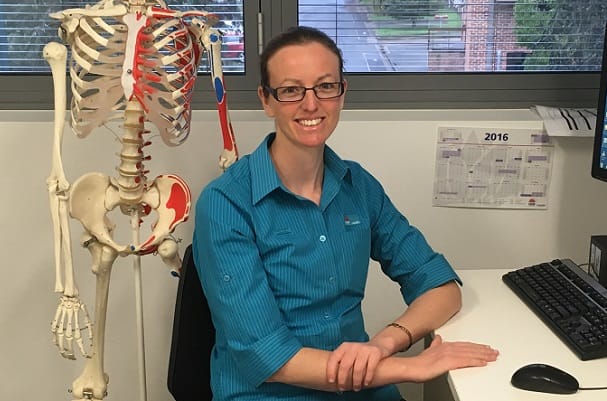
The first Western Sydney University student to be awarded Menzies Scholarship, Bernadette Brady, will complete her PhD on the project “The inequities of chronic pain – responding with culturally responsive physiotherapy”.

Bernadette, who works in the pain clinic at Liverpool Hospital in Sydney, says despite more than half of the Australian population being born overseas or having at least one parent born overseas, no published randomised controlled trial into interventions for chronic pain management (our second highest health care expense) has included culturally and linguistically diverse (CALD) participants.

Her study is set to change all that.

“We know that there are health inequities in healthcare for culturally and linguistically diverse communities and we need to make some changes to address these issues given the increase in migration worldwide.

“I’d love to see physiotherapy lead this change by conducting the first empirical investigation into the use of culturally responsive physiotherapy for a significant global issue and one that greatly impacts on Australian health costs; chronic pain,” Bernadette said.

Bernadette’s motivation to start this study came from her own community and work environment in Sydney’s south-west.

“I’ve been working for the last 10 years in the most culturally diverse health district in Australia and I continued to see differences in the patterns of patient responses in practice, from what we’d been taught to expect. I just wanted to understand why we wouldn’t get the same outcome and what could be done to change it.”

Bernadette’s study is based around two key elements – using an initial assessment tool, which is more adaptable to different cultures, and incorporating key elements of cultural preferences into the treatment program given to a patient.

All physiotherapists know the initial assessment is the key. If you take time early on with the patient you may save a lot of time by not going down the incorrect treatment path.

Bernadette’s study on CALD patients with chronic pain is using a culturally adapted physiotherapy assessment and treatment protocol, which is based on the PRISM mapping tool.

Using a page which represents the person’s life, different circles represent the ‘self’, ‘spouse/relationship’, ‘family’, ‘spirituality’, ‘recreation’, ‘work’, as well as the circle representing ‘pain’. The conversation between practitioner and patient focuses on how each of these elements relate to the ‘self’ and then talking about why and what the patient would like to see change in the picture.

“Traditionally the communities I am working with in this study are very family and community orientated, so for example if I see the family circle is a long way from the self, then that prompts me to ask more questions about that,” Bernadette said.

Rather than using the standard questionnaires often employed by physiotherapists in practice, this is very practical for patients who may not read or write in English, is less confronting than direct questioning, and helps build the relationship between practitioner and patient.

The final protocol and tools established as a result of this research will be simple enough to use in any clinical setting with the assistance of a family member if an interpreter is not available.

A pilot study is already well underway with patients who self-identify as Assyrian, Arabic or Vietnamese, who have been referred to a physiotherapist for chronic pain. The results from the first two years give Bernadette plenty of reasons for optimism that positive change can come from her work.

The findings indicate that different communities perceive pain differently.

“The findings from the focus groups are the exciting bit. What it shows is that it’s not that hard to adapt what we do; often it’s about the simple things done well,” Bernadette said.

This can include modifying exercises and exercise programs to make them more culturally relevant (so for example using slow, balance movements reminiscent of tai chi for her clients in the Vietnamese cohort and by contrast, using traditional movement and dance as part of the plan for those who identify as Assyrian), getting the family and multicultural health workers involved where needed, running exercise programs out of the potentially intimidating hospital environment in places where there is parking and they don’t have to travel out of their community, and making the effort to show you know something of their cultural background to put them at ease and help establish a relationship.

“It’s not that complicated, it’s just adapting some of the aspects of what we do as physiotherapists now when we treat chronic pain.”

One of the exciting prospects is that this assessment tool may also be adaptable to other medical or clinical settings for use with people from different ethnocultural backgrounds.

Bernadette acknowledged the amazing collaboration, support and cooperation she has received from colleagues working in the health service and Liverpool Hospital, particularly the bilingual workers in the multicultural health unit.

The Menzies Research Scholarship in the Allied Health Sciences will provide $40,000 per annum for two years to allow Bernadette to complete her PhD at Western Sydney University.

Natasha Eskinja

Digital Communications Coordinator

Natasha is driven by a profound passion for both creativity and analytics, a synergy that fosters authentic storytelling in the digital realm with both innovation and integrity. 

Throughout her career, she has consistently integrated the overarching marketing and communications narrative with the emotional connections of audiences. She is currently pursuing a Certificate in Society and the Individual from Flinders University, furthering her exploration of human behaviour and the critical importance of connectedness between organisations, individuals, and communities.

LinkedIn | natasha.eskinja@menziesfoundation.org.au

Sarah Jenkins

Strategic Communications Manager

Sarah has more than 18 years’ experience in communications and marketing leadership across a range of sectors.

Communications strategy and organisational growth is a continuing theme in Sarah’s career. Most recently, she leads the development of a Leadership Movement, evaluated by Menzies Viral Co-efficient Model; a contribution to the NFP. 

Sarah’s early career centred around best practice in marketing and communications which later culminated into the establishment of her very own agency. This work extensively spanned across PR, traditional media, event management, strategy, digital marketing, graphic design and business development consultancy. 

In 2019, Sarah joined the lean and robust team at the Menzies Foundation. She has since crafted the Foundation’s narrative and communication strategy. The development of this strategic communications platform is essential for ‘movement building’ and requires a strong strategic, management and communication skills set. Sarah has brought so much to this important work, which sits at the forefront of communication practice. 

Sarah continues to contribute to the NFP sector through her commitment to Purpose; as she reflects on her own leadership, builds her own leadership capability and contributes to the greater good. 

LinkedIn | sarah.jenkins@menziesfoundation.org.au | 0401 880 071

Rohan Martyres

Director, Strategy and Partnerships

Rohan has 15 years’ experience in facilitating cross-sector collaborations to address complex social and health challenges.  He has worked with the World Economic Forum in Australia, led an international conflict resolution field team in Nepal, and directed a 10-year £40m initiative to reduce health inequity in London.

Most recently, Rohan was Major Grants Development Manager at the Ian Potter Foundation.  He refined the foundation’s major grants strategy, and co-developed a series of large scale initiatives, including joint philanthropic-government funding for a new national organization to support place-based approaches across Australia.

Rohan has held several non-executive roles, including with an international NGO and with London Funders, the peak body of independent foundations in London.  He holds several qualifications including a graduate degree in innovation and strategy from the Judge Business School, University of Cambridge.

When Rohan isn’t exploring Melbourne’s creeks with his partner and 6yo daughter, he’s working on his currently weak Australian accent (after 15 years in the UK).

LinkedIn | rohan.martyres@menziesfoundation.org.au | 0404 505 954

Trudy Morrison

Operations Manager

A marketing and communications specialist with over 20 years experience in government, corporate and consumer marketing, Trudy brings her adaptive and organisational project management skills to the Menzies Foundation team. 

With a BA degree in Public Relations, Trudy began her career with the City of Melbourne and in magazine publishing, before moving into marketing communications consulting. She has worked in strategic marketing leadership roles with retail brands and enjoys juggling many projects and tasks simultaneously. Her skills were further enhanced when managing her own communications business representing industries across private education, financial services, aviation, government and the health industry. 

Trudy is passionate about leadership and all people being encouraged to reach their full potential through research and educational initiatives and opportunities throughout Australia. A skilled and accomplished writer and editor Trudy is enthusiastic about bringing her variety of skills to the Menzies Foundation team. 

LinkedIn | trudy.morrison@menziesfoundation.org.au | 0402 361 878

Liz Gillies

Chief Executive Officer

Liz Gillies has had over 25 years experience in a range of fields focused on initiatives for social impact. She has held roles in multiple sectors and academia.

In 2018, Liz was appointed CEO of the Menzies Foundation which aspires to build a leadership movement that supports Australians to pivot to purpose, build their leadership capability and contribute to the ‘greater good’.

Liz joined the Melbourne Business School in 2009 and was instrumental in establishing the Asia Pacific Social Impact Centre (APSIC) and The Centre for Ethical Leadership. In November 2011 she was appointed as research fellow to lead a partnership focused on strategic philanthropy which culminated in the release of the reports: Philanthropy: Towards a Better Practice Model (2018) and the Philanthropy: The Continued Journey to Real Impact and better Practice (2021).

Liz has extensive governance experience, having served on the Board of the Publish Galleries Association of Victoria, Social Firms Australia, Uniting Care Community Options, United Way Australia and the Development Committee of the Towards a Just Society Foundation. She is currently on the Philanthropy Reference Group of Barmal Bijiril and a Director of Philanthropy Australia.

LinkedIn | liz.gillies@menziesfoundation.org.au | 0416 112 703

Natasha Eskinja

Digital Communications Coordinator

Natasha is driven by a profound passion for both creativity and analytics, a synergy that fosters authentic storytelling in the digital realm with both innovation and integrity. 

Throughout her career, she has consistently integrated the overarching marketing and communications narrative with the emotional connections of audiences. She is currently pursuing a Certificate in Society and the Individual from Flinders University, furthering her exploration of human behaviour and the critical importance of connectedness between organisations, individuals, and communities.