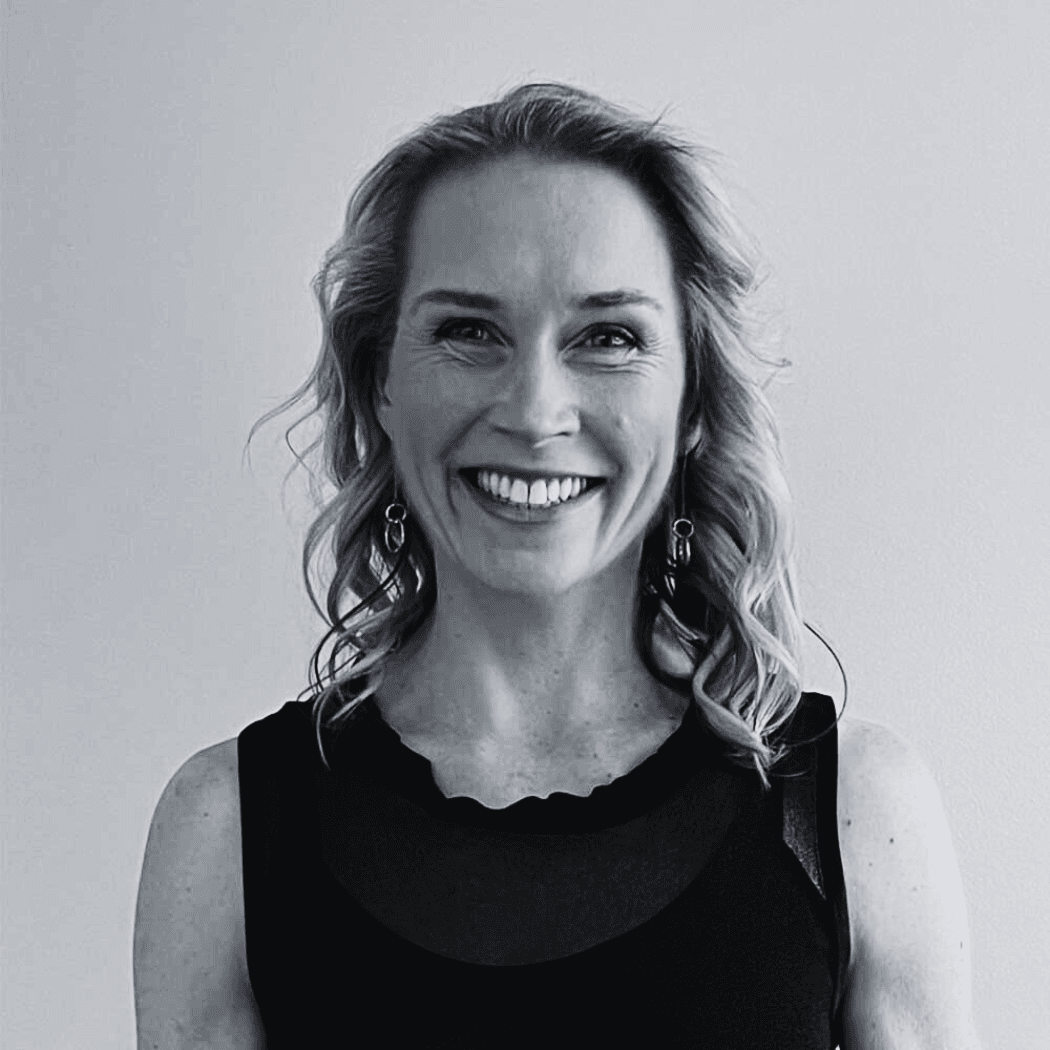
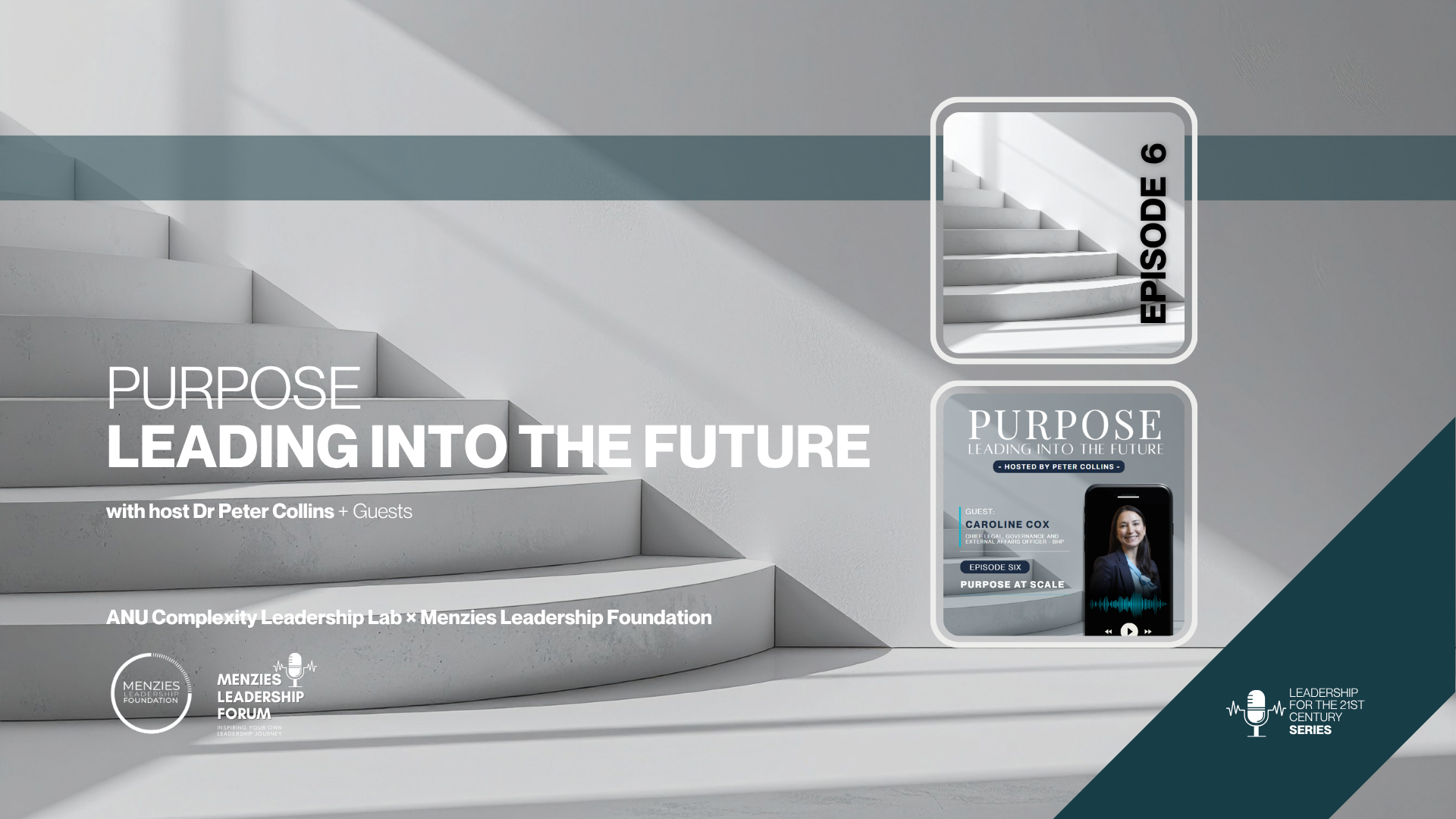
How do leaders sustain trust when every decision reverberates across communities, economies and systems? In Episode 6 of Purpose: Leading into the Future, Caroline Cox — Chief Legal, Governance and External Affairs Officer at BHP — explores one of the defining leadership challenges of our era: how do global organisations balance performance, responsibility and legitimacy under conditions of immense complexity and scrutiny?
As the series moves deeper into questions of institutional leadership, this conversation examines leadership at scale — where decisions made inside boardrooms carry consequences far beyond the organisation itself. Because when organisations operate across continents, supply chains, ecosystems and communities, leadership is no longer simply operational. It becomes societal.
Leadership through connection and conviction
Reflecting on her own leadership journey — from Canada to Oxford, international legal practice and ultimately BHP’s executive leadership team — Cox identifies two defining leadership qualities that have shaped her most deeply: connection with people, and the courage to stand for something. The leaders she most admires are not those who simply maintain the status quo. They are those willing to:
- listen deeply
- invest in relationships
- challenge assumptions
- and act with conviction even under pressure
This framing is important because it immediately shifts leadership away from hierarchy and toward stewardship. Leadership, the conversation suggests, is not only about authority. It is about the quality of judgement exercised when consequences are wide-reaching.
Rewriting purpose itself
One of the most striking moments in the episode is Cox’s reflection on BHP’s transformation of its corporate purpose. The company moved away from a highly financialised purpose statement focused primarily on shareholder value and replaced it with something fundamentally broader:
“To bring people and resources together to build a better world.”
This was not cosmetic rebranding. It represented a significant philosophical shift: from a narrow conception of organisational success to one grounded in long-term societal contribution. Importantly, the new purpose emerged through consultation with employees, suppliers, Indigenous partners, customers and communities. The result was a recognition that legitimacy could no longer be separated from responsibility.
Leadership beyond shareholder primacy
The episode repeatedly challenges simplistic notions of organisational success. Cox is clear that long-term value cannot be understood through financial metrics alone. Success increasingly depends on:
- community trust
- environmental responsibility
- Indigenous partnership
- social licence
- and institutional credibility
This is where BHP’s social value framework becomes central. The framework embeds social and environmental considerations directly into organisational decision-making — ensuring that leadership teams assess not only financial returns, but also impacts on people, communities, water, human rights and long-term sustainability. In doing so, the organisation reframes purpose from aspiration into operational discipline.
Purpose as a decision-making framework
A critical insight emerging from the conversation is that purpose matters most when decisions become difficult. Global organisations increasingly operate in environments shaped by geopolitical instability, social expectation, environmental pressure and heightened public scrutiny. There is rarely a simple “right answer.” Instead, leadership requires balancing competing obligations in real time.
Cox describes purpose as a kind of organisational “North Star” — a way of decluttering complexity and clarifying what matters most when pressure intensifies. This reflects one of the core themes running throughout the Purpose: Leading into the Future series: purpose is not merely symbolic. It is a stabilising mechanism under uncertainty.
Embedding values into systems
Importantly, the conversation rejects the idea that organisational culture can be changed through statements alone. Cox repeatedly emphasises that purpose only becomes meaningful when embedded into systems, incentives and routines. At BHP, this includes:
- integrating social value into investment decisions
- assessing both “what” leaders achieve and “how” they achieve it
- rewarding behaviours aligned with organisational values
- and ensuring frontline teams participate in decision-making responsibility
This matters because culture is not abstract. It is reinforced daily through what organisations reward, what they tolerate, what stories they celebrate, and how leaders respond under pressure.
Gender equity as institutional transformation
One of the clearest examples of purpose in action discussed in the episode is BHP’s commitment to gender equity. In 2016, women represented only 16% of the organisation. Rather than accepting incremental progress, then-CEO Andrew Mackenzie established an ambitious target: gender balance by 2030. The organisation reached the goal four years early. What is significant is not simply the outcome — but the approach.
The process required:
- redesigning equipment
- addressing cultural barriers
- improving workplace safety
- creating new pathways into mining careers
- and fundamentally rethinking assumptions about leadership and talent
The results were measurable: safer sites, stronger engagement, better production outcomes, and more innovative thinking. This reinforces a critical insight: ethical leadership and organisational performance are not competing objectives. Increasingly, they are interconnected.
Leadership during crisis
The conversation also explores one of BHP’s most difficult moments: the 2015 Samarco dam disaster in Brazil, which resulted in tragic loss of life and significant environmental damage. Cox reflects on the organisation’s response as a defining leadership lesson. Despite legal advice urging caution, then-CEO Andrew Mackenzie immediately:
- acknowledged the tragedy publicly
- travelled to Brazil
- apologised
- and committed the organisation to doing “the right thing”
This response is significant because it demonstrates leadership beyond narrow legalism. The organisation recognised that responsibility extends beyond liability. Purpose, in this context, became a guide for action under profound pressure.
Character formed through behaviour
A particularly powerful theme throughout the episode is the idea of organisational character. Cox describes how repeated behaviours become habits — and over time, shape the character of the institution itself. This is reinforced through storytelling, role modelling, psychological safety, and leadership willingness to hear dissenting perspectives.
One story shared by CEO Mike Henry captures this clearly: a young worker halted machinery over a safety concern, despite production pressures. Rather than criticising the decision, leadership publicly celebrated it as exactly the kind of judgement the organisation wanted to encourage. Moments like these shape culture far more powerfully than formal statements ever can.
Leadership as cultivation
Toward the end of the episode, the conversation turns toward culture itself. Culture, Cox suggests, is cultivated deliberately — through repeated reinforcement of behaviours, values and expectations over time. Leadership at scale therefore becomes less about control and more about stewardship: creating environments where people feel safe to raise concerns, challenge assumptions, act responsibly, and align decisions with purpose. This is how institutional legitimacy is sustained.
What this means for leadership
This episode expands the series’ exploration of purpose into the realities of large-scale institutional leadership. It asks how organisations sustain trust under scrutiny, how leaders balance competing stakeholder claims, and how institutions remain legitimate when consequences are amplified globally. The answer offered is not simplistic. But it is clear: purpose must move beyond language and become embedded in systems, culture and judgement.
Looking ahead
As Purpose: Leading into the Future continues, this conversation highlights a defining challenge for modern institutions: how do organisations maintain legitimacy when every decision carries social, environmental and economic consequence? Because increasingly, leadership at scale is not judged solely by performance. It is judged by trust, responsibility, transparency, and whether organisations continue to act with integrity when pressure intensifies. And ultimately, whether they are willing to build not only successful enterprises — but a better world alongside them.
🎧 Listen to Episode 6 — Purpose at Scale — from the Purpose: Leading into the Future podcast series.