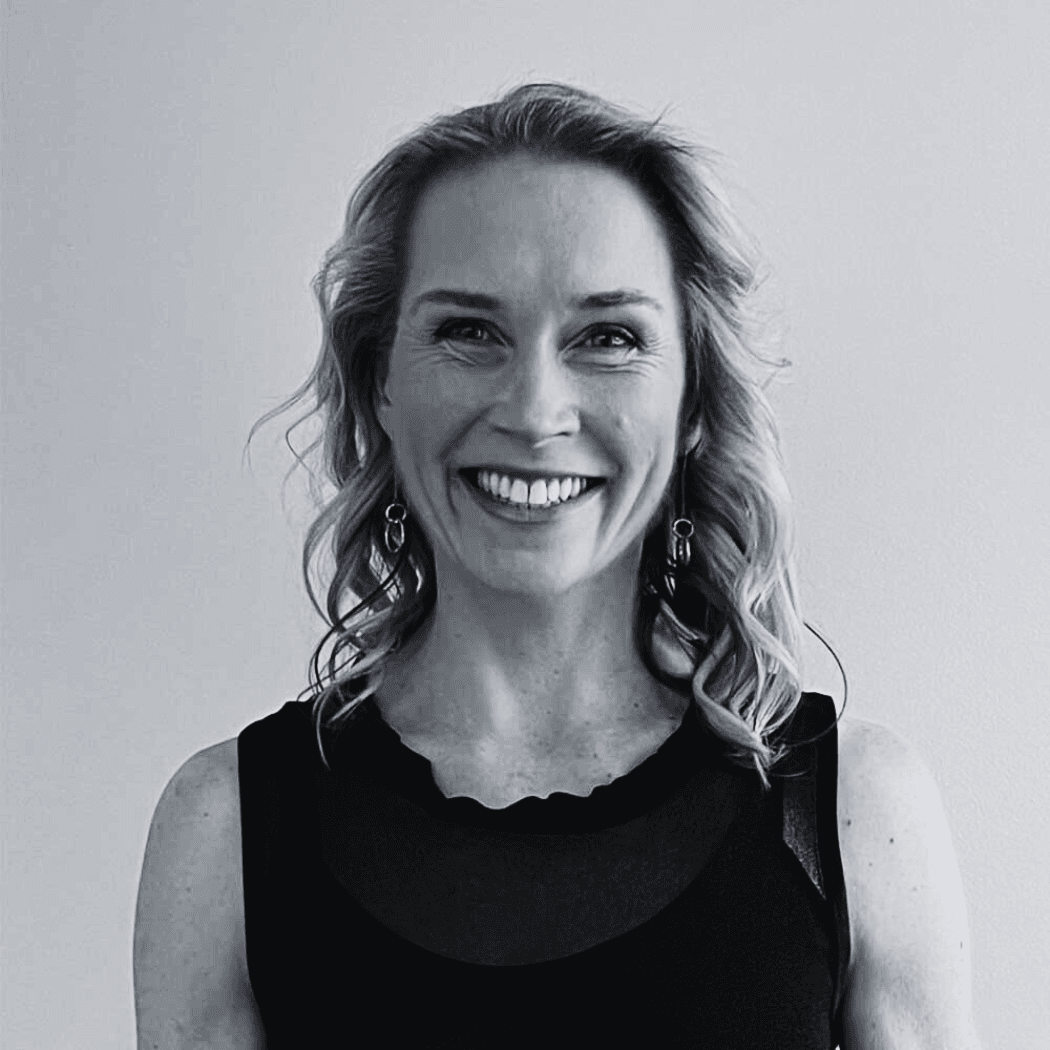
By Sarah Jenkins, Menzies Leadership Foundation
The greatest act of leadership today is not to resolve every tension, but to hold it — with steadiness, humility, and imagination — until something better becomes possible.
Leadership in 2025 is defined not by clarity of answers but by the courage to navigate competing truths. Across institutions, communities and organisations, leaders are facing tensions that cannot be neatly resolved: stability versus adaptation; individual freedom versus collective responsibility; short-term pressure versus long-term stewardship.
We are living in a time where certainty is scarce and complexity is abundant. Traditional leadership instincts — to fix, to simplify, to decide quickly — are no longer sufficient. The leaders who will shape the future are those who can hold tension without retreating into polarisation or false simplicity.
Paradox is no longer a philosophical concept. It is now a practical competency.

The New Reality of Competing Demands
Deloitte’s Global Human Capital Trends 2025 highlights that 86% of organisations now expect leaders to navigate paradox and systemic tension as a core capability. This shift reflects the realities of an interdependent world where decisions ripple across teams, sectors and societies.
The World Economic Forum’s Future of Jobs Report 2025 reinforces this, naming complex problem-solving, systems thinking, and analytical judgment among the fastest-growing leadership skills.
Meanwhile, the Edelman Trust Barometer continues to show widening fractures in public confidence, with societal polarisation becoming a defining risk. In such an environment, leaders must hold space for disagreement while nurturing possibility.
Paradox is the new terrain. Leaders cannot escape it — they must learn to navigate it.
Why Paradox Matters
Complex challenges — climate transition, AI governance, social cohesion, demographic shifts — come with tensions that cannot be fully resolved. Paradox leadership recognises:
- Two conflicting realities can be true at the same time.
- Progress requires synthesis, not sides.
- Tension is a source of innovation, not a sign of failure.
When leaders reject or ignore tension, systems become brittle. When leaders engage tension with openness, systems become adaptive.
Leadership Across Levels
At the individual level
Paradox shows up in the personal decisions leaders make every day. A manager trying to balance empathy with accountability; a teacher navigating curriculum requirements with the emotional needs of students; a CEO balancing shareholder expectations with social responsibility.
Holding tension requires:
- Emotional regulation
- Reflection
- Curiosity
- The willingness to slow down before speeding up
It is not about indecision, but about disciplined openness.
At the organisational level
Organisations must move beyond binary thinking. Instead of choosing between efficiency OR innovation, they must cultivate structures that allow both. This includes:
- Encouraging dissenting perspectives
- Building cross-functional decision processes
- Rewarding experimentation, not just outcomes
- Designing dual operating systems — a stable core + an adaptive edge
The organisations that thrive in 2025 are those that embrace complexity rather than suppress it.
At the system and community level
Governments, NGOs and civic institutions must navigate ideological divides, geographic disparities and generational expectations. Tension in this context is unavoidable.
Leaders must build coalitions across difference, design participatory governance models, and hold space for competing viewpoints while still moving forward.
Paradox in Action
- Climate policy
Governments must balance economic growth with environmental protection — a classic paradox. Countries that succeed create blended strategies: transitioning industries while protecting workers.
- AI regulation
Innovation must coexist with safety. Successful organisations embed flexible governance models that encourage responsible experimentation.
- Community cohesion
Local councils often mediate between residents seeking growth and those wanting conservation. Their effectiveness depends less on selecting a side and more on facilitating shared understanding.
What Leaders Can Do
Name the tension
Acknowledging the paradox reduces anxiety and creates shared understanding.
Reframe the question
Shift from “Which side is right?” to “How might both be true?”
Create reflective space
Tension cannot be held at speed. Leaders need intentional pauses to absorb complexity.
Prototype the path forward
Small experiments reduce risk and reveal synthesis.
Invite diverse perspectives
Paradox requires multiple lenses to fully understand the terrain.
Risks of Ignoring Paradox
Leaders who avoid tension risk:
- Making decisions that please one group but alienate others
- Oversimplifying issues that require nuance
- Fueling polarisation
- Losing legitimacy
- Driving organisational or civic fragmentation
The cost of simplistic leadership is now too high.
The Courage to Stay With the Discomfort
Paradox leadership demands courage — the courage to stay in the discomfort long enough for new possibilities to emerge. Instead of collapsing tension, leaders must work within it, recognising that durable solutions arise from synthesis, not certainty.
This is leadership that invites, rather than imposes. Leadership that listens deeply. Leadership that chooses complexity over caricature.
Series Overview
This article is part of Leadership in 2025 – A Shared Responsibility, a thought-leadership series authored by Sarah Jenkins at the Menzies Leadership Foundation. Drawing on global research and local insights, the series explores how leadership is evolving across individuals, organisations, communities, and systems. From trust and grievance to AI governance, human sustainability, and the future of work, each piece unpacks the challenges and opportunities shaping leadership in an age of complexity.
At the Menzies Leadership Foundation, we believe the defining work of leadership today is not to erase tension, but to hold it — patiently, bravely, and with the discipline to stay open when certainty feels easier.
In an age shaped by competing truths, paradox is no longer an obstacle to overcome; it is the terrain leaders must learn to navigate. The leaders who will shape our shared future are those who can sit with discomfort, invite multiple perspectives, and create the conditions for new possibilities to emerge.
We support leaders who resist false choices, who honour both stability and adaptation, who balance empathy with accountability, and who steward long-term responsibility amid short-term pressure.
This is leadership that strengthens trust, deepens capability, and builds institutions that are resilient enough to hold complexity without fracturing.
If this is the kind of leadership you are committed to — leadership with the courage to hold tension — we invite you to connect with us.