
The Menzies Leadership Foundation and Global Voices have selected Arya Moodley, Ashton Shurey and Pooja Zinzuwadia to represent Australia at the United Nations General Assembly Sixth Committee in New York, 5–9 October 2026.
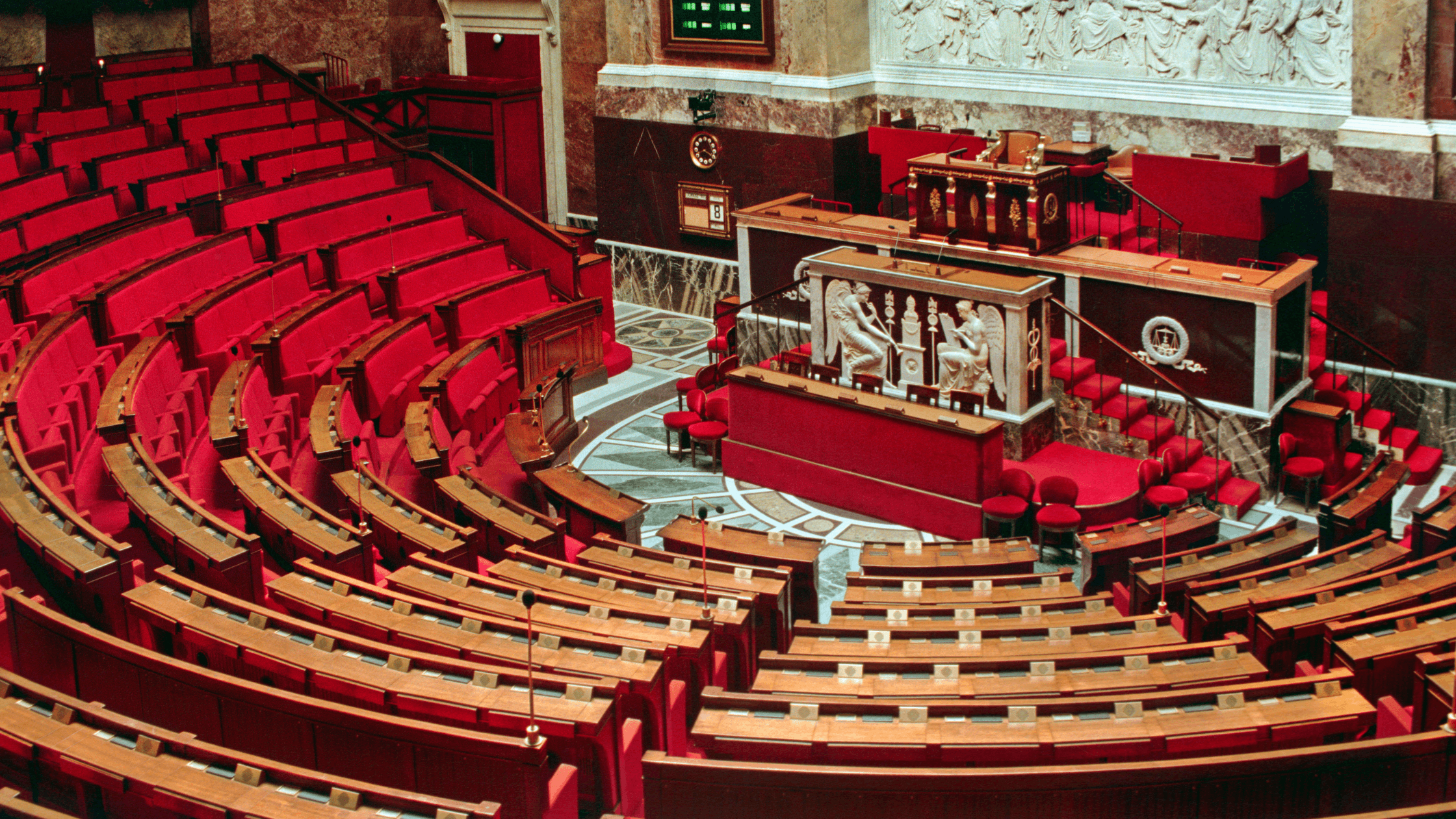
The Sixth Committee is the principal forum through which the General Assembly considers questions of international law. It is where states debate the rules that govern conduct between nations and, increasingly, the standards by which individuals are held to account for the gravest breaches of those rules. It is a fitting destination for a delegation that carries Sir Ninian Stephen's name.
Before he became Australia's twentieth Governor-General, Stephen sat on the High Court of Australia. Afterwards, in 1993, he was appointed one of the eleven founding judges of the International Criminal Tribunal for the former Yugoslavia, where he helped shape the early jurisprudence of the first international criminal court convened since Nuremberg and sat on the bench that delivered its inaugural trial judgment. His career traced a conviction that this delegation inherits: that law is not only a domestic instrument but an international responsibility, and that its legitimacy depends on its capacity to protect those with the least power to protect themselves.
That inheritance has rarely been more relevant. This year's fellows enter the profession at a moment when the international legal order is openly contested, when the institutions built to enforce accountability are under sustained political pressure, and when technology is reshaping the exercise of state power faster than the law has adapted to govern it. What distinguishes Arya, Ashton and Pooja is not a general enthusiasm for these debates but the specificity of their work: each has identified a precise problem at the edge of current legal practice, and each arrives in New York with a developed view on how it might be addressed.

Arya Moodley
Arya Moodley is a penultimate-year Laws and Politics student at the University of Sydney, whose work is directed toward using legal practice to advance the rights of women and underrepresented communities. Her experience spans internships at Clifford Chance and Eucalyptus and frontline advocacy as a facilitator at the Survivor's Hub, supporting survivors of sexual assault. She has also served as a development and partnerships intern at the International Girls School Coalition and as Head of School Engagement at Raise Our Voices Australia.
Her policy examines violence against women held in Australian immigration detention, and the protections available to detained women whose treatment is rarely subject to public scrutiny. The subject sits at the intersection of two areas of active international concern: the human rights obligations owed to people held in closed and immigration settings, and the gendered dimensions of displacement and forced migration. As detention regimes around the world face renewed examination, Arya's interest lies in the distance between a state's stated international commitments and its domestic conduct toward those least able to assert their own rights — and in what closing that distance would require.

Ashton Shurey
Ashton Shurey is a fifth-year student at Monash University, completing a Bachelor of Laws (Honours) and a Bachelor of Global Studies with a specialisation in cultural competence and Mandarin. He has studied on exchange at the University of Auckland and completed an international law internship with the Ham Diley Campaign Afghanistan Support Clinic. He speaks four languages and works at the intersection of international law, human rights and diplomacy, with a particular interest in how Australia engages with multilateral institutions.
His policy considers how Australia might make fuller use of universal jurisdiction — the principle that the most serious international crimes may be prosecuted regardless of where they were committed or the nationality of those involved — to strengthen accountability and better support victim-survivors. The question is far from theoretical. The scope and application of universal jurisdiction is a standing item on the Sixth Committee's own agenda, and recent years have seen a marked rise in such prosecutions before domestic courts, even as the wider institutions of international criminal justice face significant political pressure. Australia has exercised the principle sparingly. Ashton's work asks what it would take to address the legal and institutional barriers responsible for that reticence — a line of inquiry that runs directly back to the tribunal Sir Ninian Stephen helped establish.

Pooja Zinzuwadia
Pooja Zinzuwadia is a fourth-year student at Western Sydney University, studying a Bachelor of Laws and a Bachelor of Criminal and Community Justice, and an elected member of the University's Board of Trustees. Three years working within the federal Attorney-General's portfolio have given her a close view of both the promise and the hazards of emerging technology, alongside a commitment to creating pathways for women from Western Sydney to lead.
Her focus is the use of artificial intelligence in migration systems. She is persuaded of its capacity to make those systems faster and more humane, but alert to what occurs when consequential decisions are delegated to opaque automated processes — where an absence of transparency and accountability can turn human judgments into unexaminable outputs, with bias and error embedded out of sight. She is equally concerned with the technology's capacity for harm against women, from deepfakes to synthetic exploitation that appropriates identity and safety. Her work aligns with one of the defining legal shifts of the moment: the move from voluntary AI principles toward binding regulation, including frameworks that now classify the use of AI in migration, asylum and border management as high-risk and subject it to requirements of human oversight, transparency and fundamental-rights assessment. Pooja's contribution is to press on whose interests those rules ultimately serve, and whom they are written to protect.
The program, and what comes next
The Sir Ninian Stephen Law Program, delivered in partnership with Global Voices, cultivates emerging leaders in international law and policy and places them inside the institutions where that law is made. Selection gives these fellows the opportunity to refine their policy proposals, observe multilateral negotiation at close range, and engage with the practitioners and decision-makers who shape it.
The Menzies Leadership Foundation supports a model of leadership grounded in clarity of purpose and a sense of shared responsibility — one concerned less with individual advancement than with the collaborative capacity required to address complex public problems. Investing in emerging legal minds, and giving them direct exposure to the forums that govern international conduct, is part of that work.
This announcement marks the beginning of the fellows' work, not its conclusion. Between now and October, Arya, Ashton and Pooja will refine their proposals, prepare to represent Australia, and take their place in one of the most consequential legal forums in the world. It is a journey worth following from the very start.
This delegation is also part of a wider commitment: to open pathways into civic and global leadership for those who might not otherwise find them, and to ensure that Australia's emerging legal minds are informed, globally engaged, and equipped for the responsibilities ahead. If you are a legal practitioner, an educator, a leader in public life, or an organisation invested in strengthening Australia's contribution to international law and policy, we invite you to explore how the Foundation's work and networks can connect with what you are building.
So we invite you to walk this road with us. Join our community to follow Arya, Ashton and Pooja from selection through to the Sixth Committee and back, and to stay engaged with the work we are doing to help promising young leaders move from early conviction to lasting public contribution. Sign up below, and we will keep you close to every step of the journey.