When Systems Stop Bouncing Back

Leadership in an age of fragility. For many years, leadership thinking has centred on the idea of resilience. Shock. Adaptation. Recovery. Return. But many leaders are beginning to recognise something different. Some systems no longer bounce back the way they once did. They continue functioning — but with less capacity, less trust, and less margin for error.

Resilience assumes recovery. Many leaders are now managing fragility. Fragile systems rarely collapse dramatically. Instead they thin gradually. Each disruption leaves something slightly diminished. Relationships take longer to repair. Resources become harder to replace. Energy drains faster than it is restored. Leaders often sense this shift before it becomes widely acknowledged.
They see it in exhausted teams who have not fully recovered from previous pressures. In institutions struggling to replace experienced staff who leave. In communities where participation in civic life becomes harder to sustain.

Volunteer groups that once supported neighbourhood life struggle to recruit new members. Local clubs that once thrived now rely on a shrinking core of committed individuals. Nothing appears broken. Yet the system no longer rebounds as easily as it once did. This changes the work of leadership.

In resilient systems, leaders focus on adaptation and growth. In fragile systems, leaders must also protect what remains intact. Leadership shifts from acceleration to stewardship. From pushing forward to holding steady. This can feel uncomfortable in cultures that celebrate innovation and transformation. Yet in fragile systems, moving too quickly can deepen strain rather than relieve it.

Leadership judgment becomes critical. What must change? What must stabilise? What must simply be carried until conditions improve? These questions require patience as much as courage.

Fragility also changes how success is measured. In resilient environments, leaders are praised for bold progress. In fragile systems, the most important achievements may be invisible. Relationships maintained. Communities held together. Systems prevented from tipping into failure. These forms of leadership rarely attract headlines. Yet they may be the work that matters most.

Not everything can be fixed immediately. Some things must be protected until they can recover. The coming decade may therefore require leaders who understand fragility — leaders who recognise when the responsible act is not to accelerate change, but to stabilise what still works. Leadership will not be defined solely by how boldly we transform systems. It will be defined by how carefully we protect what still holds.


About the Author
Sarah Jenkins is Director, Communications and Engagement at the Menzies Leadership Foundation, where she shapes national conversations on leadership, legitimacy and social cohesion. Her work sits at the intersection of narrative, systems change and public discourse, with a focus on how leadership is understood, practised and sustained in complex, contested environments.

Continue the Conversation
The questions raised in this piece are not abstract—they are playing out across institutions, communities and public life in real time. If this perspective resonates, or challenges your own, Sarah welcomes the opportunity to engage. Connect with Sarah Jenkins on LinkedIn to continue the conversation on leadership, legitimacy and the future of public trust.

Fragility doesn’t announce itself — it accumulates in the spaces between disruptions, recognised only by those paying close attention. This essay names what many leaders have already sensed: that stewardship is its own form of courage, and protecting what still holds is not a lesser ambition than transformation. It is the work fragile systems actually require.

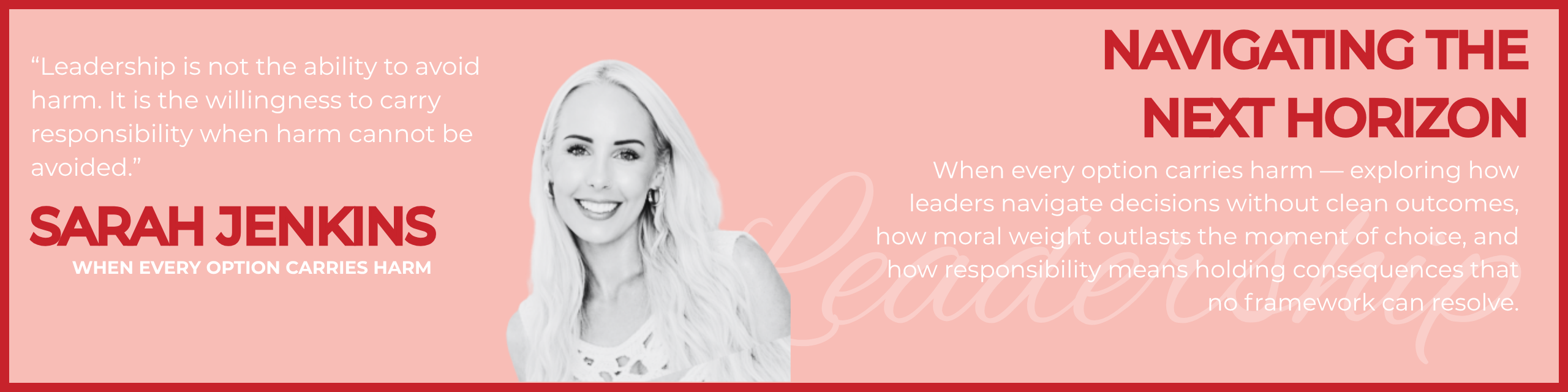
The next essay continues here: how to lead when stabilising is the responsible act rather than the cautious one, how to measure success when the most important outcomes are invisible, and how to hold a system steady without mistaking stillness for stagnation. Continue with us.

Related Posts

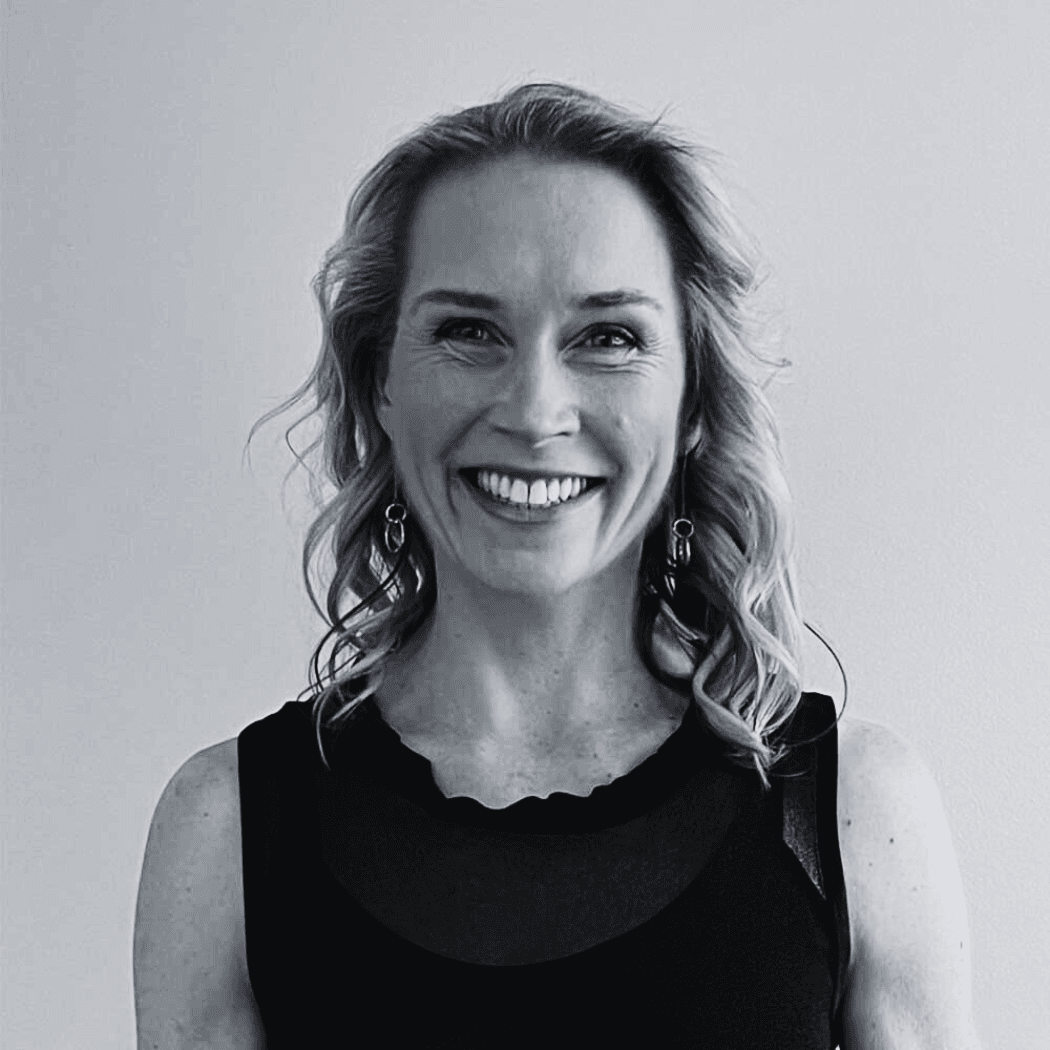
Natasha Eskinja

Digital Communications Coordinator

Natasha is driven by a profound passion for both creativity and analytics, a synergy that fosters authentic storytelling in the digital realm with both innovation and integrity. 

Throughout her career, she has consistently integrated the overarching marketing and communications narrative with the emotional connections of audiences. She is currently pursuing a Certificate in Society and the Individual from Flinders University, furthering her exploration of human behaviour and the critical importance of connectedness between organisations, individuals, and communities.

LinkedIn | natasha.eskinja@menziesfoundation.org.au

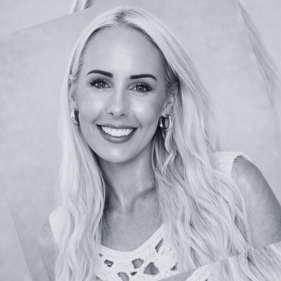
Sarah Jenkins

Strategic Communications Manager

Sarah has more than 18 years’ experience in communications and marketing leadership across a range of sectors.

Communications strategy and organisational growth is a continuing theme in Sarah’s career. Most recently, she leads the development of a Leadership Movement, evaluated by Menzies Viral Co-efficient Model; a contribution to the NFP. 

Sarah’s early career centred around best practice in marketing and communications which later culminated into the establishment of her very own agency. This work extensively spanned across PR, traditional media, event management, strategy, digital marketing, graphic design and business development consultancy. 

In 2019, Sarah joined the lean and robust team at the Menzies Foundation. She has since crafted the Foundation’s narrative and communication strategy. The development of this strategic communications platform is essential for ‘movement building’ and requires a strong strategic, management and communication skills set. Sarah has brought so much to this important work, which sits at the forefront of communication practice. 

Sarah continues to contribute to the NFP sector through her commitment to Purpose; as she reflects on her own leadership, builds her own leadership capability and contributes to the greater good. 

LinkedIn | sarah.jenkins@menziesfoundation.org.au | 0401 880 071

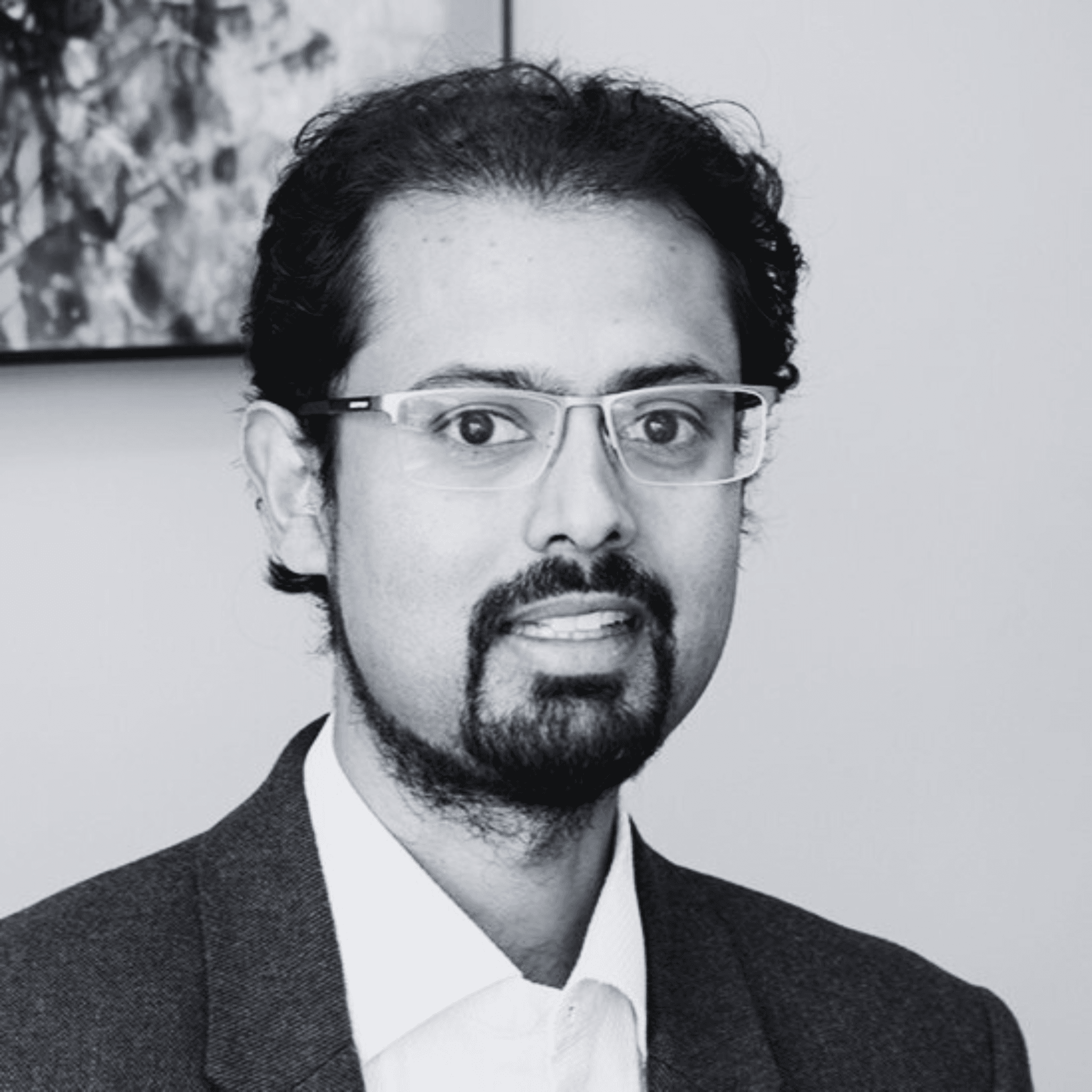
Rohan Martyres

Director, Strategy and Partnerships

Rohan has 15 years’ experience in facilitating cross-sector collaborations to address complex social and health challenges.  He has worked with the World Economic Forum in Australia, led an international conflict resolution field team in Nepal, and directed a 10-year £40m initiative to reduce health inequity in London.

Most recently, Rohan was Major Grants Development Manager at the Ian Potter Foundation.  He refined the foundation’s major grants strategy, and co-developed a series of large scale initiatives, including joint philanthropic-government funding for a new national organization to support place-based approaches across Australia.

Rohan has held several non-executive roles, including with an international NGO and with London Funders, the peak body of independent foundations in London.  He holds several qualifications including a graduate degree in innovation and strategy from the Judge Business School, University of Cambridge.

When Rohan isn’t exploring Melbourne’s creeks with his partner and 6yo daughter, he’s working on his currently weak Australian accent (after 15 years in the UK).

LinkedIn | rohan.martyres@menziesfoundation.org.au | 0404 505 954

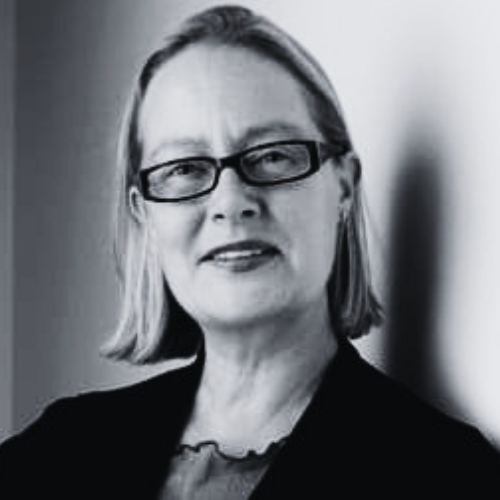
Trudy Morrison

Operations Manager

A marketing and communications specialist with over 20 years experience in government, corporate and consumer marketing, Trudy brings her adaptive and organisational project management skills to the Menzies Foundation team. 

With a BA degree in Public Relations, Trudy began her career with the City of Melbourne and in magazine publishing, before moving into marketing communications consulting. She has worked in strategic marketing leadership roles with retail brands and enjoys juggling many projects and tasks simultaneously. Her skills were further enhanced when managing her own communications business representing industries across private education, financial services, aviation, government and the health industry. 

Trudy is passionate about leadership and all people being encouraged to reach their full potential through research and educational initiatives and opportunities throughout Australia. A skilled and accomplished writer and editor Trudy is enthusiastic about bringing her variety of skills to the Menzies Foundation team. 

LinkedIn | trudy.morrison@menziesfoundation.org.au | 0402 361 878

Liz Gillies

Chief Executive Officer

Liz Gillies has had over 25 years experience in a range of fields focused on initiatives for social impact. She has held roles in multiple sectors and academia.

In 2018, Liz was appointed CEO of the Menzies Foundation which aspires to build a leadership movement that supports Australians to pivot to purpose, build their leadership capability and contribute to the ‘greater good’.

Liz joined the Melbourne Business School in 2009 and was instrumental in establishing the Asia Pacific Social Impact Centre (APSIC) and The Centre for Ethical Leadership. In November 2011 she was appointed as research fellow to lead a partnership focused on strategic philanthropy which culminated in the release of the reports: Philanthropy: Towards a Better Practice Model (2018) and the Philanthropy: The Continued Journey to Real Impact and better Practice (2021).

Liz has extensive governance experience, having served on the Board of the Publish Galleries Association of Victoria, Social Firms Australia, Uniting Care Community Options, United Way Australia and the Development Committee of the Towards a Just Society Foundation. She is currently on the Philanthropy Reference Group of Barmal Bijiril and a Director of Philanthropy Australia.

LinkedIn | liz.gillies@menziesfoundation.org.au | 0416 112 703

Natasha Eskinja

Digital Communications Coordinator

Natasha is driven by a profound passion for both creativity and analytics, a synergy that fosters authentic storytelling in the digital realm with both innovation and integrity. 

Throughout her career, she has consistently integrated the overarching marketing and communications narrative with the emotional connections of audiences. She is currently pursuing a Certificate in Society and the Individual from Flinders University, furthering her exploration of human behaviour and the critical importance of connectedness between organisations, individuals, and communities.