
Can a new national initiative help rebuild the norms of respect, dialogue and trust that hold communities together?
In recent years, many Australians have sensed a shift in the tone of public conversation.
Debates that once unfolded with a degree of mutual respect increasingly feel sharper, louder and more divisive. Social media has amplified disagreement, trust in institutions has declined, and many communities report feeling more fragmented than connected.
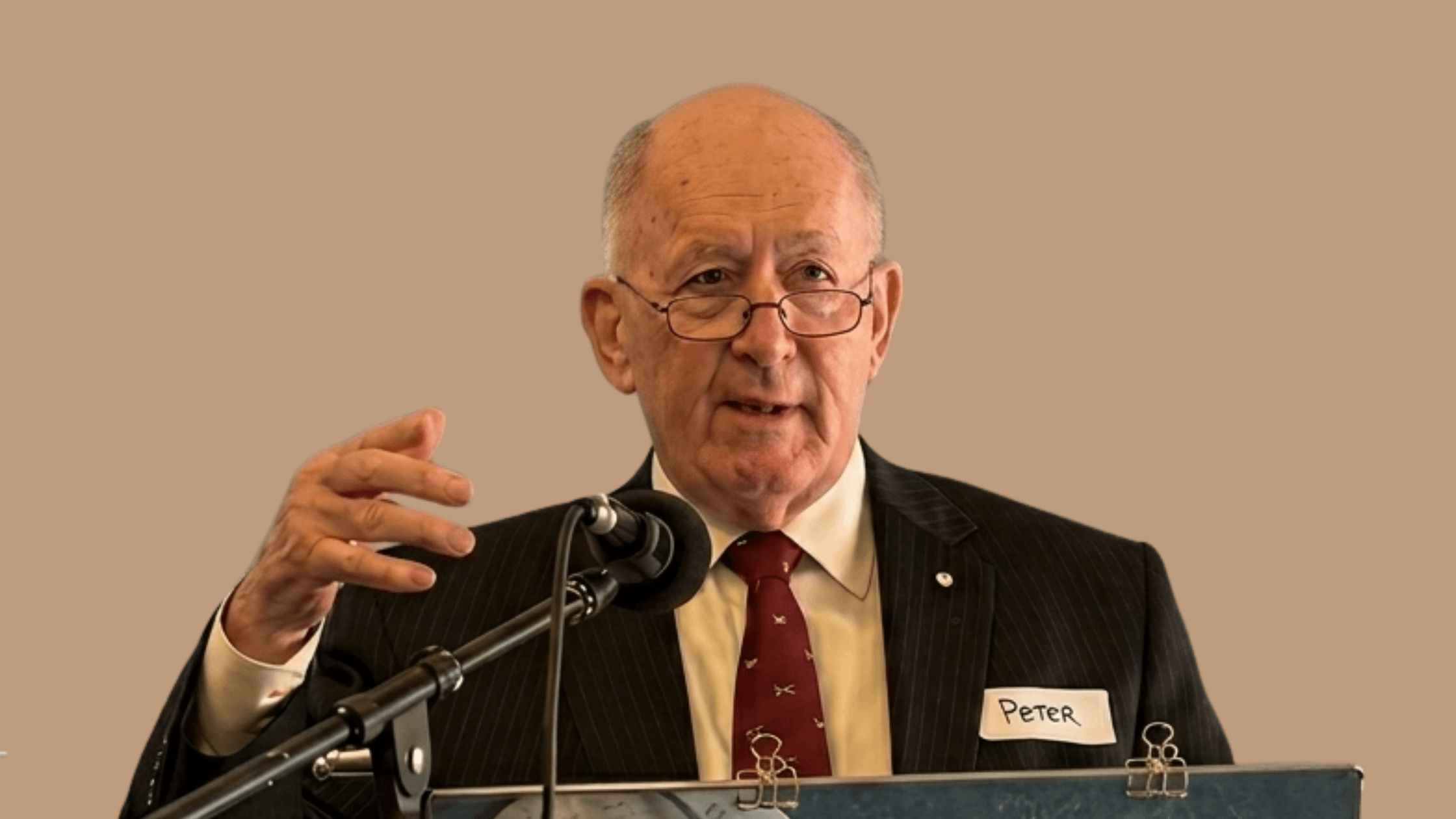
Former Governor-General General Sir Peter Cosgrove believes the issue goes deeper than politics.
Speaking with The Australian ahead of the launch of a new national initiative led by the Menzies Leadership Foundation, he reflected on how the culture of public discourse has changed.
Comments that would once have been considered inflammatory have become commonplace, he noted, contributing to a climate where disagreement can quickly turn into hostility. Civility, he argues, is not about suppressing debate — it is about recognising that people are entitled to different views and engaging with those differences respectfully.
The concern is not simply about manners. It is about the health of democracy itself.
And it is this concern that has inspired a new national effort to rebuild the foundations of respectful civic life.
A new national initiative
The Menzies Leadership Foundation has launched Reimagining a Civil Australia, an ambitious initiative designed to strengthen social cohesion and encourage constructive dialogue across Australian communities.
Chaired by Sir Peter Cosgrove through a newly established National Civility Taskforce, the initiative brings together a coalition of community organisations, practitioners, researchers and philanthropic partners to explore how civility can be strengthened in everyday life.
Rather than focusing solely on national politics or media debates, the initiative takes a broader view.
It asks a deeper question:
How do communities build the cultural conditions that allow people to disagree without division and diversity without fragmentation?
Leadership beyond titles
For the Menzies Leadership Foundation, the work sits at the intersection of leadership and social cohesion.
The Foundation’s philosophy is simple but powerful: leadership is not limited to those in formal positions of authority. It is a capability that can be cultivated across communities, institutions and generations.
Complex challenges — from climate change to social inequality — cannot be solved by individuals acting alone. They require collaborative, adaptive leadership that brings people together across differences.
This approach underpins the Foundation’s broader mission to build leadership capacity for the greater good.
It also shapes how the civility initiative is designed.
The goal is not merely to encourage polite behaviour. It is to strengthen the civic capabilities that enable people to listen across differences, challenge harmful narratives and work collectively toward shared goals.
Why civility matters now
Across many democracies, public trust is declining while polarisation is increasing.
Digital media has transformed the information landscape. Algorithms often reward outrage more than nuance, while communities can become trapped in echo chambers that reinforce existing beliefs.
At the same time, many societies are grappling with difficult conversations about race, identity, inequality and historical injustice.
In Australia, these pressures have manifested in rising concern about racism, social division and the erosion of shared civic norms.
The initiative recognises that racism is not always expressed through overt acts of prejudice. It can also be embedded in the stories societies tell, the assumptions people carry, and the silence that sometimes surrounds difficult conversations.
Addressing these dynamics requires more than policy change.
It requires cultural change.
Starting where communities live
One of the defining features of Reimagining a Civil Australia is its commitment to place-based experimentation.
Rather than designing solutions in a national office and deploying them across the country, the initiative begins with communities themselves.
Local trials will explore how civility can be strengthened in ways that reflect local history, culture and community priorities.
These experiments will generate insights that can later inform a broader national approach.
Two early trials are already underway.
Ballarat: a city of civic ideas
The first is the Ballarat Civility Exchange, delivered in partnership with the Ballarat Foundation.
Ballarat is an appropriate starting point for such work.
The city has long played an important role in Australia’s democratic story. The Eureka Rebellion of the 1850s was a pivotal moment in the country’s struggle for representation and fairness.
More than 170 years later, Ballarat remains a place where communities continue to grapple with complex social challenges while seeking new ways to strengthen civic life.
The Civility Exchange will bring together local leaders, community organisations, businesses and residents to explore how civility can be embedded in everyday interactions.
The trial will include community dialogues, workshops, small-scale community actions and the formation of a Civility Collective — a network of local leaders and connectors working to strengthen respectful dialogue in the region.
The aim is not simply to talk about civility but to experiment with practical ways of strengthening it.
Learning from Tasmania
A second trial is taking place in Tasmania in partnership with Collaboration for Impact, where civility work will be integrated into the Tasmania Community Resilience Initiative.
The project will explore how narratives, leadership practices and civic engagement can support a more inclusive and connected Tasmanian society.
Together, the Ballarat and Tasmania trials will help identify the cultural, social and institutional conditions that enable people to engage constructively across differences.
The insights generated through these experiments will inform the design of a national mechanism for strengthening civility across Australia.
A coalition for change
At the heart of the initiative is collaboration.
The Menzies Leadership Foundation is convening a civility coalition bringing together organisations working in areas including intercultural engagement, media, community development and anti-racism.
The coalition will meet regularly to reflect on insights emerging from the trials, share knowledge and contribute to the design of future initiatives.
This collaborative approach reflects the complexity of the challenge.
Civility cannot be restored through a single program or organisation. It must emerge through collective effort across sectors and communities.
Reimagining the social contract
The phrase “Reimagining a Civil Australia” is deliberately ambitious.
It suggests that the task is not simply to return to some imagined past.
Instead, it is about rethinking how a diverse, modern society can build the norms and relationships that allow people to live together with dignity and respect.
At its core, the initiative invites Australians to reflect on a simple but profound question:
What kind of civic culture do we want to build together?
The answer will not emerge overnight.
But by supporting communities to experiment, learn and lead together, the Menzies Leadership Foundation hopes to contribute to a broader national effort to strengthen the social fabric that underpins Australian democracy.
The task of rebuilding civil Australia is not the work of institutions alone. It is the work of communities — of people willing to listen across difference, to challenge narratives that divide, and to imagine together what a more respectful, connected society might look like. The trials underway in Ballarat and Tasmania are beginning this work, demonstrating that civility is not imposed from above but cultivated from within — through dialogue, through relationship, and through the deliberate choice to engage across difference with dignity.
If you sense this shift is necessary in your own community, you are not alone. The Menzies Leadership Foundation invites you to join this national conversation about what it means to build a civil Australia — and to explore the role you might play in strengthening the civic culture of your place. The work begins with questions. It continues with commitment. It flourishes when communities lead. Join the conversation.