




Live dashboard
Ballarat
The first place-based pilot, the Ballarat Civility Exchange, brings community reflections and emerging patterns into a live public dashboard.
Open the Ballarat dashboard →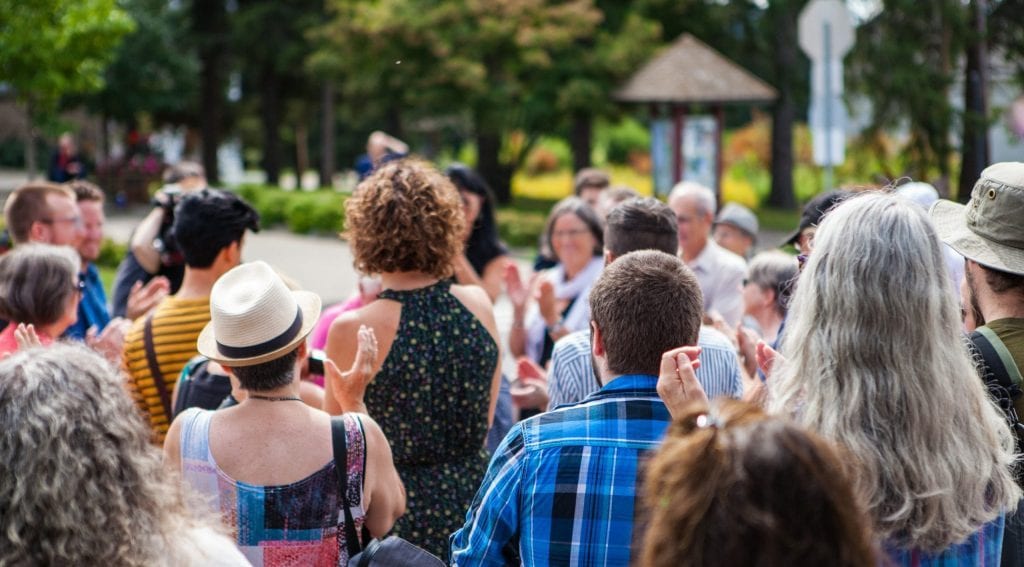
A National Initiative · Launched Ballarat, February 2026
Strengthening civility, trust and the capability to engage constructively across difference; launched in Ballarat and contributing to the development of national civic infrastructure.
Open the National Civility Dashboard →Why this matters
Australia is navigating rising distrust, polarisation and social fragmentation, alongside increasing pressure on the everyday relationships that hold communities together.
These pressures are not evenly distributed. They are felt most sharply in place, in schools, workplaces, neighbourhoods, councils and community organisations, where people still need to make decisions, care for one another and act together across difference.
Reimagining a Civil Australia responds with a practical question: what does it take to keep people in relationship across difference, at scale, and over time?
Our position
Personal capability without shared infrastructure burns people out. Infrastructure without capability sits empty. Held together, they make constructive engagement possible.
Staying present to views we do not share.
Holding difference without severing relationship.
Returning after rupture, rather than withdrawing.
Moving from conversation to shared commitment.
Libraries, halls, schools, sporting clubs, main streets.
Convening, facilitation, deliberation, local ritual.
Councils, community organisations, funders, policy.
Communities that can disagree well, decide together and stay in relationship; over years, not moments.
How change happens
Each practice is incomplete on its own. Learning without action drifts into abstraction; action without learning repeats mistakes; neither holds at scale unless the surrounding conditions shift with them.
Building shared language, evidence and reflection across sectors, so different actors can see the same picture and act on it.
Place-based pilots that translate national ambition into local practice: anchored in community leadership and lived experience.
Working on policy, investment and coordination, the structural conditions that determine whether civility can be sustained at scale.
What the Coalition learned
Across its first phase the Coalition explored four framings of civility and identified four enabling conditions: capacity, capability, trust and belonging. That work was documented independently by Paper Giant, whose reflection and case study sit alongside this site as the primary reading on what the work required, what it produced and what it revealed.
Paper Giant's public reflection on the enabling conditions the Coalition surfaced across its first phase of convenings.
Read the reflection →Paper Giant · Case studyA project case study on how the first phase was designed, facilitated and held across very different organisations.
Read the case study →From learning to practice
Each community brings its own history, tensions and leadership. Together the pilots translate national learning into practice, and feed local insight back into the national picture.
The first place-based pilot, the Ballarat Civility Exchange, brings community reflections and emerging patterns into a live public dashboard.
Open the Ballarat dashboard →A place-based civility and community resilience process exploring how local leadership, connection and trust can support communities navigating change.
Resources comingA pilot in development, designed with local leadership in one of Australia's most complex and important civic contexts.
Resources coming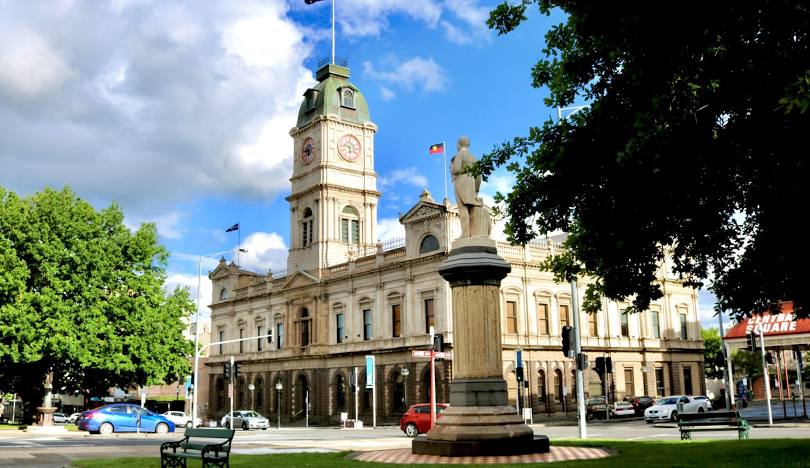
Featured pilot
The Ballarat Civility Exchange makes visible how civility is being experienced in place: surfacing experiences and patterns associated with trust, connection and civility, and where small civic practices may help strengthen connection.
The public dashboard is designed to be revisited: as the pilot deepens, new reflections, patterns and experiments will be added.
Emerging national priorities
These are not programs. They are the shared conditions that keep surfacing across the Coalition and the place-based pilots, the work no single organisation can carry alone.
How do we know whether civility is strengthening or eroding?
Shared ways of tracking what builds or depletes civility, so pilots, funders and policymakers read the same signal.
Who connects the many actors already doing this work?
Connective tissue between organisations, so effort compounds instead of duplicating across sectors and places.
What sustains civic infrastructure beyond a project cycle?
Funding structures and governance arrangements built for decades of stewardship rather than short grant horizons.
Contributing to national policy
The Royal Commission process is one example of the initiative moving from shared frameworks to a joint contribution to national policy. The joint submission was endorsed by six participating organisations, not the Coalition as a whole. The process was supported by the Scanlon Foundation and facilitated by Tanck, with the independence of each participating organisation preserved.
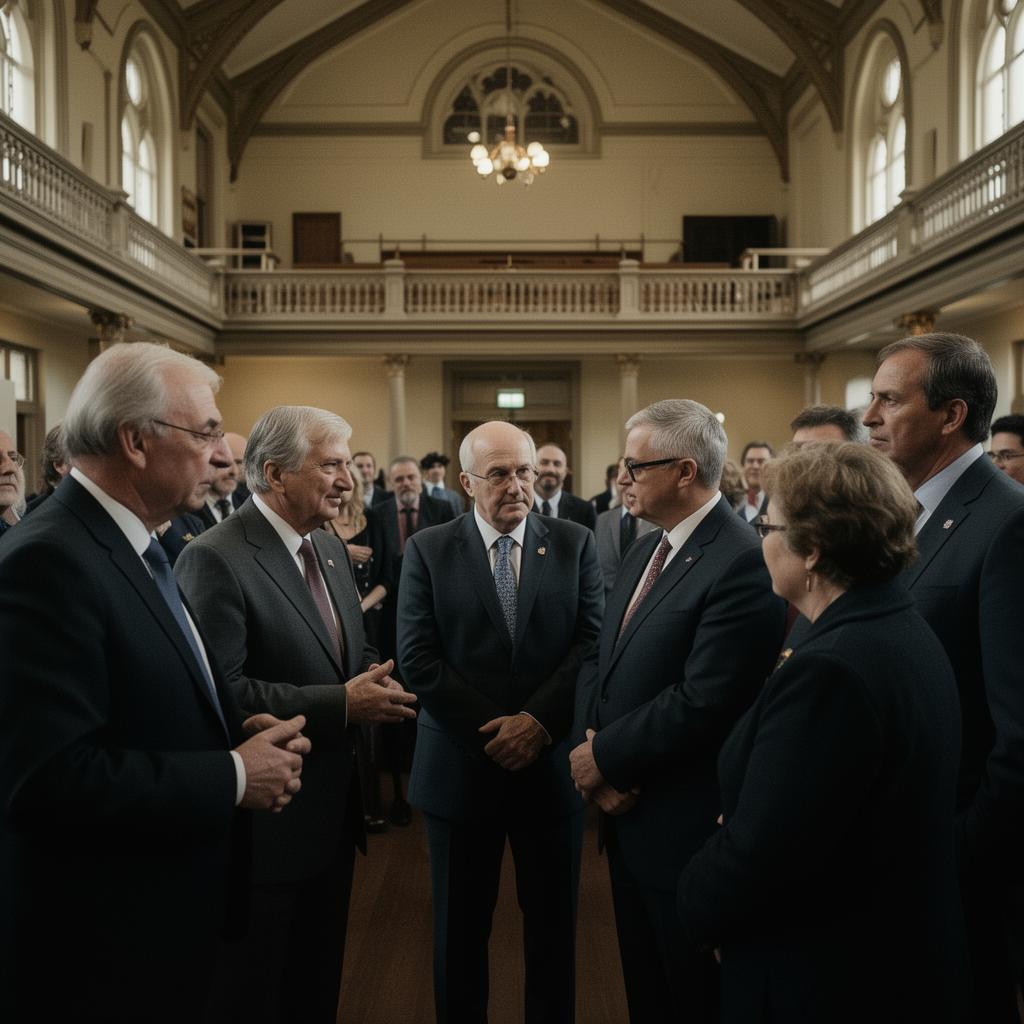
A joint submission endorsed by six participating organisations: Ballarat Foundation, Collaboration for Impact, The Ethics Centre, Global Access Partners, Welcoming Australia and the Menzies Leadership Foundation (Convenor): modelling the very capacity it argues for: different organisations holding a shared contribution across difference.
Read the joint submissionThe Menzies Leadership Foundation's own submission, describing the design choices behind catalysing a collective contribution and the conditions that made it possible.
Read the Foundation submissionKnowledge hub
Dashboards, Coalition reflections, submissions and place-based materials; hover or tap a tile to see more.
The living national view of the initiative.
Where the work is happening, what it is producing and how to explore it; updated as new pilots, reflections and data come online.
The first place-based public dashboard.
Community reflections, emerging patterns and early insights from Ballarat; designed to be revisited as the pilot deepens.
What a national coalition learned.
Paper Giant's public reflection on the enabling conditions surfaced across the Coalition's first phase of convenings.
How the Coalition was designed and held.
A case study on the facilitation, structure and tensions of holding very different organisations in one shared process.
Joint submission endorsed by six organisations.
The joint submission to the Royal Commission process, endorsed by six participating organisations and supported by the Scanlon Foundation with facilitation by Tanck.
The Foundation's own contribution.
The Menzies Leadership Foundation's account of the design choices behind catalysing a collective contribution.
Public materials from the Tasmanian civility and community resilience process, published as the work matures.
Materials from the developing Alice Springs pilot, published in partnership with local leadership.
The next phase
The next phase focuses on continuity: supporting the communities already doing the work, growing the knowledge base, and exploring with Coalition members how shared learning and emerging priorities might inform future collective work.
Sustained backing for Ballarat, Tasmania and Mparntwe / Alice Springs as they deepen their place-based work.
Growing the National Civility Dashboard and the Ballarat dashboard, and adding new place resources as the work matures.
A national moment to share what has been learned is one option under consideration, rather than a confirmed event.
Coalition members will be invited to consider how the shared learning, relationships and emerging priorities might inform future collective work.
Partners & participation
The initiative is held by a coalition of organisations contributing place, research, practice and stewardship. Each partner brings a distinct mandate; together they hold the conditions for collective work.
The fourteen organisations holding the Coalition’s shared work and contributing to its collective outputs.









Get involved
If your organisation, community or work touches these questions, we would like to hear from you, as a partner, contributor, or fellow-traveller in the next phase.
Citizen leaders are the backbone of resilient societies, fostering agency, strengthening trust and creating the conditions for communities to thrive.
ExploreExploring purpose, principle and human agency in a world increasingly shaped by artificial intelligence.
ExploreIn partnership with the Australian National University, the Foundation is advancing understanding of what it takes to lead in uncertain and fast-changing environments.
ExploreThe Foundation supports young people to develop the capability to lead with purpose, integrity and responsibility, moving from potential to practice.
Explore