Trauma-Informed Leadership: Reimagining Accountability in Systems of Power

“Leadership means making institutions worthy of people’s trust.”

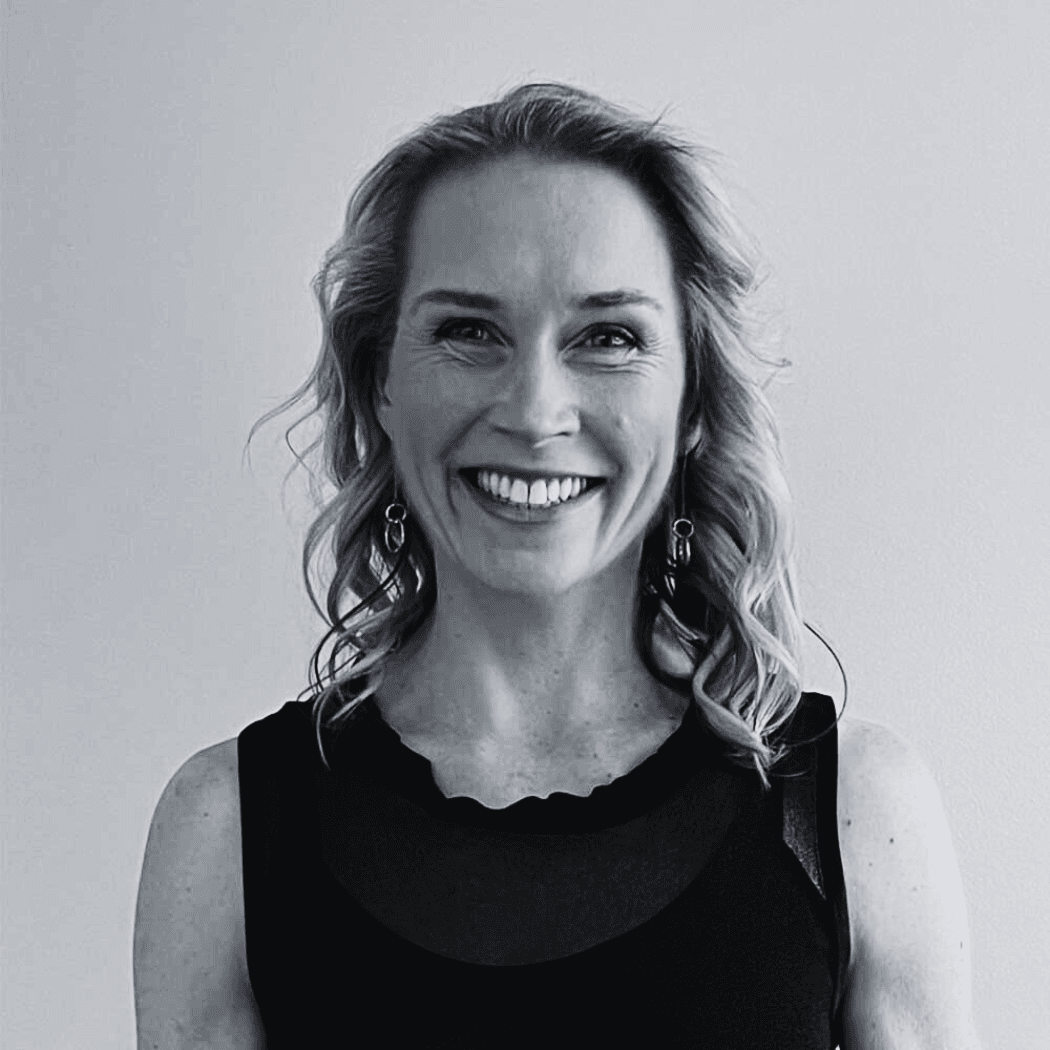
When Jordyn Gray talks about leadership, she does not speak in abstractions. She speaks in systems — in the gaps between policy and practice, between what institutions promise and what survivors actually experience. A Menzies Global Voices Fellow and passionate advocate for reform, Jordyn’s work sits at the intersection of trauma, accountability and the kind of leadership that refuses to look away.

Her conviction is straightforward, even when the terrain is not: institutions that hold power over people’s lives must be held to a standard that reflects the humanity of those they serve. And right now, many are falling short.

The Gap Between Policy and People

Jordyn’s focus on trauma-informed leadership did not emerge in a vacuum. It grew from a clear-eyed examination of how institutions — particularly those entrusted with national service and public safety — respond when people are at their most vulnerable. The Australian Defence Force, like many large and hierarchical organisations, operates within structures where accountability can become procedural rather than meaningful, and where the experiences of survivors can be minimised or obscured entirely.

What Jordyn advocates for is a fundamental shift — not just in policy language, but in institutional culture. Trauma-informed leadership, in her view, is not a framework to be bolted onto existing systems. It is a different way of understanding power, responsibility and what it means to lead with integrity.

“When institutions design processes without centring the people most affected,” she reflects, “they are not just failing those individuals — they are eroding the trust that makes public institutions function at all.”

Accountability as a Practice, Not a Policy

At the heart of Jordyn’s advocacy is a belief that accountability must be lived rather than legislated. Data transparency, survivor-led policy design and ethical leadership are not optional additions to good governance — they are its foundation. Without them, reform remains surface-level, and the people who need protection most are left to navigate systems that were not built with their safety in mind.

Her experience through the Global Voices Fellowship and the Y20 process deepened this understanding. Engaging with decision-makers across government and civil society, Jordyn encountered both the limitations and the possibilities of systems in motion. She saw where political will exists and where it stalls. She also saw what becomes possible when people with lived proximity to a problem are given genuine access to the rooms where solutions are shaped.

“Being in those spaces reminded me that change is not inevitable,” she says. “It requires people who are willing to name what is not working and stay at the table long enough to build something better.”

Survivor-Led, Systems-Focused

What distinguishes Jordyn’s approach is her insistence that reform must be led by those with direct experience of institutional harm — not simply informed by their accounts after the fact. Survivor-led policy is not just a matter of equity; it is a matter of quality. Decisions made without this perspective are decisions made with incomplete information.

This is particularly urgent in contexts like the ADF, where cultural norms around silence, loyalty and hierarchy can compound the barriers survivors already face. Jordyn argues that data transparency is a critical enabler here — that when institutions are required to be honest about patterns of harm, it becomes harder to treat individual cases as anomalies rather than symptoms of systemic failure.

Leadership Worthy of Trust

Jordyn’s vision of leadership is demanding — and deliberately so. It asks institutions to do more than manage risk or maintain reputation. It asks them to be genuinely accountable to the people whose lives they shape.

At the Menzies Leadership Foundation, this kind of leadership is not aspirational language — it is the standard we seek to nurture in every Fellow. Investing in emerging leaders like Jordyn is an investment in a future where Australia’s institutions are led by people who understand that power carries responsibility, and that trust must be earned through action, not assumed through authority.

Her work is a reminder that the most important reforms are rarely the easiest ones — and that the leaders willing to pursue them are exactly the kind Australia needs.

Jordyn Gray is a Menzies Global Voices Fellow. Applications for the 2026 Global Voices Fellowship are now open. If you are committed to leadership that is ethical, community-connected and capable of driving meaningful change, we invite you to explore the Fellowship and stay connected with the Menzies Leadership Foundation’s broader emerging leadership community.

Natasha Eskinja

Digital Communications Coordinator

Natasha is driven by a profound passion for both creativity and analytics, a synergy that fosters authentic storytelling in the digital realm with both innovation and integrity. 

Throughout her career, she has consistently integrated the overarching marketing and communications narrative with the emotional connections of audiences. She is currently pursuing a Certificate in Society and the Individual from Flinders University, furthering her exploration of human behaviour and the critical importance of connectedness between organisations, individuals, and communities.

LinkedIn | natasha.eskinja@menziesfoundation.org.au

Sarah Jenkins

Strategic Communications Manager

Sarah has more than 18 years’ experience in communications and marketing leadership across a range of sectors.

Communications strategy and organisational growth is a continuing theme in Sarah’s career. Most recently, she leads the development of a Leadership Movement, evaluated by Menzies Viral Co-efficient Model; a contribution to the NFP. 

Sarah’s early career centred around best practice in marketing and communications which later culminated into the establishment of her very own agency. This work extensively spanned across PR, traditional media, event management, strategy, digital marketing, graphic design and business development consultancy. 

In 2019, Sarah joined the lean and robust team at the Menzies Foundation. She has since crafted the Foundation’s narrative and communication strategy. The development of this strategic communications platform is essential for ‘movement building’ and requires a strong strategic, management and communication skills set. Sarah has brought so much to this important work, which sits at the forefront of communication practice. 

Sarah continues to contribute to the NFP sector through her commitment to Purpose; as she reflects on her own leadership, builds her own leadership capability and contributes to the greater good. 

LinkedIn | sarah.jenkins@menziesfoundation.org.au | 0401 880 071

Rohan Martyres

Director, Strategy and Partnerships

Rohan has 15 years’ experience in facilitating cross-sector collaborations to address complex social and health challenges.  He has worked with the World Economic Forum in Australia, led an international conflict resolution field team in Nepal, and directed a 10-year £40m initiative to reduce health inequity in London.

Most recently, Rohan was Major Grants Development Manager at the Ian Potter Foundation.  He refined the foundation’s major grants strategy, and co-developed a series of large scale initiatives, including joint philanthropic-government funding for a new national organization to support place-based approaches across Australia.

Rohan has held several non-executive roles, including with an international NGO and with London Funders, the peak body of independent foundations in London.  He holds several qualifications including a graduate degree in innovation and strategy from the Judge Business School, University of Cambridge.

When Rohan isn’t exploring Melbourne’s creeks with his partner and 6yo daughter, he’s working on his currently weak Australian accent (after 15 years in the UK).

LinkedIn | rohan.martyres@menziesfoundation.org.au | 0404 505 954

Trudy Morrison

Operations Manager

A marketing and communications specialist with over 20 years experience in government, corporate and consumer marketing, Trudy brings her adaptive and organisational project management skills to the Menzies Foundation team. 

With a BA degree in Public Relations, Trudy began her career with the City of Melbourne and in magazine publishing, before moving into marketing communications consulting. She has worked in strategic marketing leadership roles with retail brands and enjoys juggling many projects and tasks simultaneously. Her skills were further enhanced when managing her own communications business representing industries across private education, financial services, aviation, government and the health industry. 

Trudy is passionate about leadership and all people being encouraged to reach their full potential through research and educational initiatives and opportunities throughout Australia. A skilled and accomplished writer and editor Trudy is enthusiastic about bringing her variety of skills to the Menzies Foundation team. 

LinkedIn | trudy.morrison@menziesfoundation.org.au | 0402 361 878

Liz Gillies

Chief Executive Officer

Liz Gillies has had over 25 years experience in a range of fields focused on initiatives for social impact. She has held roles in multiple sectors and academia.

In 2018, Liz was appointed CEO of the Menzies Foundation which aspires to build a leadership movement that supports Australians to pivot to purpose, build their leadership capability and contribute to the ‘greater good’.

Liz joined the Melbourne Business School in 2009 and was instrumental in establishing the Asia Pacific Social Impact Centre (APSIC) and The Centre for Ethical Leadership. In November 2011 she was appointed as research fellow to lead a partnership focused on strategic philanthropy which culminated in the release of the reports: Philanthropy: Towards a Better Practice Model (2018) and the Philanthropy: The Continued Journey to Real Impact and better Practice (2021).

Liz has extensive governance experience, having served on the Board of the Publish Galleries Association of Victoria, Social Firms Australia, Uniting Care Community Options, United Way Australia and the Development Committee of the Towards a Just Society Foundation. She is currently on the Philanthropy Reference Group of Barmal Bijiril and a Director of Philanthropy Australia.

LinkedIn | liz.gillies@menziesfoundation.org.au | 0416 112 703

Natasha Eskinja

Digital Communications Coordinator

Natasha is driven by a profound passion for both creativity and analytics, a synergy that fosters authentic storytelling in the digital realm with both innovation and integrity. 

Throughout her career, she has consistently integrated the overarching marketing and communications narrative with the emotional connections of audiences. She is currently pursuing a Certificate in Society and the Individual from Flinders University, furthering her exploration of human behaviour and the critical importance of connectedness between organisations, individuals, and communities.