
Leadership is often described as the ability to make difficult decisions. What is less frequently acknowledged is how many decisions leaders now face are impossible to resolve cleanly. In an age of constraint, leaders increasingly confront choices where every option carries cost. There is no neutral path. No outcome that leaves everyone unharmed.
Some decisions are not about choosing the right option. They are about choosing which harm can be carried.
This reality emerges whenever competing human needs collide. A school principal managing conflict between students and families. A community organisation deciding how to allocate limited support.
A leader guiding a group through disagreement that touches identity, values, or belonging. Every option protects someone. Every option disappoints someone else. In such moments, leaders are not deciding between right and wrong. They are deciding between consequences.
Consider the dilemmas leaders faced across communities during recent years of disruption. Schools balancing safety with students’ social wellbeing. Community organisations choosing how to allocate scarce support to families in need. Institutions deciding when to reopen shared spaces after prolonged closures. In each case, protecting one group risked disadvantaging another.
Acting quickly carried one set of consequences. Waiting carried another. Inaction did not remove harm. It simply redistributed it over time. Yet leadership discourse often avoids confronting this reality. Many frameworks assume decisions can be made rationally, cleanly, and without residue.
Leaders know otherwise. When outcomes carry unavoidable consequences, the emotional and moral weight of those choices often remains with the leader long after the decision is made.
Doubt lingers. Did we act too soon? Too late? Did we protect the right people? These questions rarely appear in leadership manuals. Yet they shape the lived experience of leadership profoundly.
Moral strain is not a personal weakness. It is the cost of caring in constrained systems.
Recognising this reality changes how we think about ethical leadership. It is not the pursuit of perfect outcomes. It is the willingness to take responsibility for decisions whose consequences cannot be fully resolved.
Leaders who acknowledge this openly — naming trade-offs rather than disguising them — often build deeper credibility. People recognise honesty about complexity.
The coming decade will not remove these dilemmas. If anything, they will intensify. Resource constraints, social expectations, and institutional pressures will increasingly place leaders in situations where clean answers do not exist. In those moments, leadership will not be measured by certainty. It will be measured by responsibility.
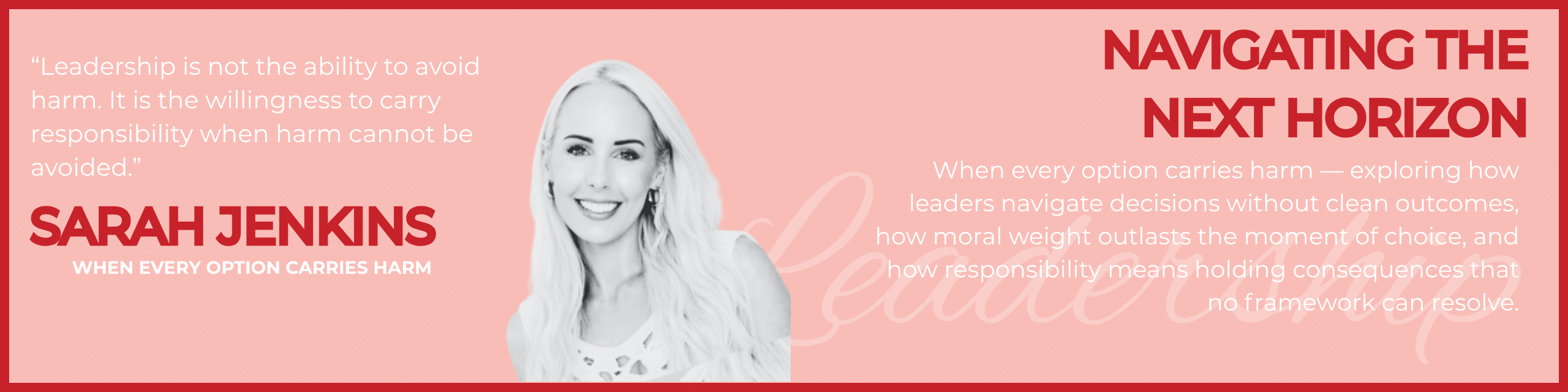
Leadership is not the ability to avoid harm. It is the willingness to carry responsibility when harm cannot be avoided.