Flexible Work, Flourishing Regions: A New Vision for Public Sector Leadership

“Place shapes purpose — and purpose can reshape place.”

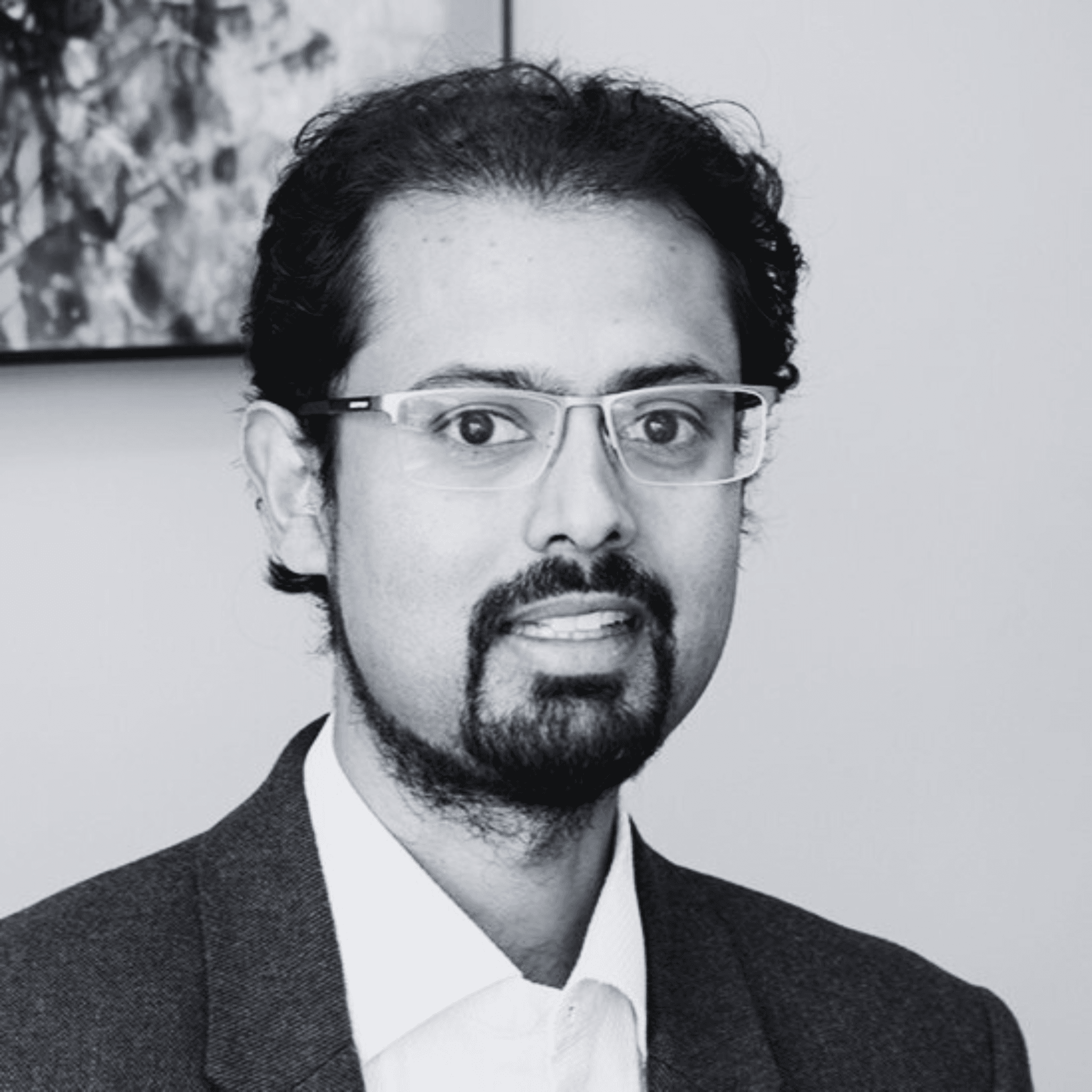
When Bayan Yazdani talks about regional Australia, he is not speaking from a distance. He is speaking from Darwin — a city that knows something about existing at the edge of national attention, and about the gap between how policy is made and how it lands in the communities it is supposed to serve. For Bayan, that gap is not just a policy problem. It is a leadership failure — and one the Australian Public Service has both the opportunity and the obligation to address.

A 2023 Menzies Global Voices Fellow, Senior Consultant at Nous Group and now Senior Policy Officer at the Department of Agriculture, Fisheries and Forestry, Bayan brings an unusually rich set of lenses to questions of public sector innovation and regional equity. His undergraduate studies in psychology, international relations and French, followed by a Master of Business Administration specialising in international trade and development, gave him both the analytical tools and the cross-cultural fluency to understand inequality not just as a domestic problem but as a structural one — rooted in how institutions are designed and for whom.

The APS Problem Nobody Is Talking About

The pandemic changed how Australians work. For two years, the Australian Public Service demonstrated — clearly and at scale — that policy and program administration roles could be performed successfully from anywhere. Productivity held. Teams adapted. And for a moment, it seemed like the geographic barrier between regional Australians and quality public sector employment might finally be challenged.

Then the return-to-office pressure began

Bayan’s policy paper, developed through the Menzies Global Voices Policy Fellowship and presented at the IMF and World Bank Annual Meetings in Marrakech, Morocco, identified precisely this tension — and argued that the APS is missing a critical opportunity. Recent reforms negotiated between the Community and Public Sector Union and the Australian Public Service Commission expanded flexible work arrangements for existing public servants. But they left recruitment untouched. The result is a system that remains structurally biased toward those who live in, or are willing to relocate to, capital cities — and most often, Canberra.

For rural and regional Australians, this is not a minor inconvenience. Poverty rates in regional areas are consistently higher than in major cities. Unemployment runs at 7.4% regionally compared to 5.8% in urban centres — against just 3.1% in the ACT. And the barriers to relocation are rarely just financial, though they are often that too, with Canberra’s rental prices remaining among the highest nationally. They include carer responsibilities, disability, cultural and kinship ties to country and community, and the simple reality that uprooting your life for a junior public service role is not a trade-off that should be demanded of talented people simply because of where they were born.

“Place shapes purpose,” Bayan reflects, “and purpose can reshape place.” His argument is that a genuinely flexible APS — one that embeds location-agnostic work from recruitment through to exit, not just for those already inside the system — could become one of the most powerful levers available for reducing the economic inequality that runs between Australia’s capitals and its regions.

The View From Marrakech

Presenting this argument at the IMF and World Bank Annual Meetings in Morocco placed Bayan’s domestic policy proposal in a global frame. The meetings, which convene finance ministers, central bank governors and development leaders from around the world, are where the macroeconomic architecture of opportunity is debated and shaped. And the question at the heart of Bayan’s work — how do institutions distribute access to meaningful, well-paid work, and what does it mean when that access is geographically concentrated — is one that resonates far beyond Australia’s borders.

Bayan’s broader career has always moved across scales. His New Colombo Plan Scholarship and Australia-Indonesia Youth Exchange experience deepened his understanding of how people-to-people ties and intercultural fluency shape the possibilities for cooperation and development. His work as an AFS Intercultural Programs Facilitator, and his volunteering with the Australian Red Cross supporting migrants and refugees navigating employment barriers, reflect a consistent orientation toward people at the structural edges of opportunity — those for whom the system’s design is most consequential. He was also recognised as one of 18 Asia-Pacific Sustainability Stars for his contributions across these domains — an acknowledgement that his work sits at the intersection of people, place and purpose.

Public Service as a Vehicle for Social Mobility

What makes Bayan’s vision distinctive is its insistence that the public sector itself must lead the change it advocates for. Governments routinely call for regional investment, rural resilience and place-based policy. But if the institutions designing those policies are staffed almost entirely by people who live in capital cities — people without lived experience of the challenges they are trying to solve — the quality of what gets designed is inevitably diminished.

Flexible APS recruitment is not, in Bayan’s framing, simply a workforce convenience. It is a social mobility intervention. It is a way of bringing the perspectives of regional Australians — from Darwin to Devonport, from Broken Hill to Broome — into the rooms where national priorities are set. And it is a way of ensuring that talented people in those communities do not have to choose between serving their place and building a meaningful career.

At the Menzies Leadership Foundation, this kind of thinking — connecting public sector innovation to equity of opportunity, and grounding policy ambition in lived experience — is precisely the kind of leadership we exist to support. Bayan’s work is a reminder that the most important reforms are not always the most visible ones. Sometimes they begin with a question about where people are allowed to work — and what it means when the answer excludes most of the country.

Bayan Yazdani is a 2023 Menzies Global Voices Fellow. Applications for the 2026 Global Voices Fellowship are now open. If you are committed to leadership that bridges place and policy, champions equity of opportunity, and is willing to rethink how public institutions serve all Australians, we invite you to explore the Fellowship and stay connected with the Menzies Leadership Foundation’s broader emerging leadership community.


Australia’s regions are not underserved because of a lack of talent. They are underserved because of how institutions are designed — and for whom. Through his Menzies Global Voices Fellowship, Bayan Yazdani took that insight to the IMF and World Bank Annual Meetings in Marrakech, arguing that a genuinely flexible Australian Public Service — one that embeds location-agnostic work from recruitment, not just for those already inside the system — could become one of the most powerful levers available for reducing the economic inequality that runs between Australia’s capitals and its regions.

His work is a reminder that the most important reforms are not always the most visible. Sometimes they begin with a question about where people are allowed to work — and what it means when the answer excludes most of the country. Public sector flexibility, in Bayan’s framing, is not a workforce convenience. It is a social mobility intervention — a way of bringing the perspectives of regional Australians into the rooms where national priorities are set.

At the Menzies Leadership Foundation, this is precisely the kind of leadership we exist to support: grounded in lived experience, connecting policy ambition to equity of opportunity, and willing to rethink how public institutions serve all Australians.

Applications for the 2026 Global Voices Fellowship are now open. If you are committed to leadership that bridges place and policy and champions equity of opportunity, we invite you to explore the Fellowship and stay connected with the Menzies Leadership Foundation’s emerging leadership community.

Related Posts

Natasha Eskinja

Digital Communications Coordinator

Natasha is driven by a profound passion for both creativity and analytics, a synergy that fosters authentic storytelling in the digital realm with both innovation and integrity. 

Throughout her career, she has consistently integrated the overarching marketing and communications narrative with the emotional connections of audiences. She is currently pursuing a Certificate in Society and the Individual from Flinders University, furthering her exploration of human behaviour and the critical importance of connectedness between organisations, individuals, and communities.

LinkedIn | natasha.eskinja@menziesfoundation.org.au

Sarah Jenkins

Strategic Communications Manager

Sarah has more than 18 years’ experience in communications and marketing leadership across a range of sectors.

Communications strategy and organisational growth is a continuing theme in Sarah’s career. Most recently, she leads the development of a Leadership Movement, evaluated by Menzies Viral Co-efficient Model; a contribution to the NFP. 

Sarah’s early career centred around best practice in marketing and communications which later culminated into the establishment of her very own agency. This work extensively spanned across PR, traditional media, event management, strategy, digital marketing, graphic design and business development consultancy. 

In 2019, Sarah joined the lean and robust team at the Menzies Foundation. She has since crafted the Foundation’s narrative and communication strategy. The development of this strategic communications platform is essential for ‘movement building’ and requires a strong strategic, management and communication skills set. Sarah has brought so much to this important work, which sits at the forefront of communication practice. 

Sarah continues to contribute to the NFP sector through her commitment to Purpose; as she reflects on her own leadership, builds her own leadership capability and contributes to the greater good. 

LinkedIn | sarah.jenkins@menziesfoundation.org.au | 0401 880 071

Rohan Martyres

Director, Strategy and Partnerships

Rohan has 15 years’ experience in facilitating cross-sector collaborations to address complex social and health challenges.  He has worked with the World Economic Forum in Australia, led an international conflict resolution field team in Nepal, and directed a 10-year £40m initiative to reduce health inequity in London.

Most recently, Rohan was Major Grants Development Manager at the Ian Potter Foundation.  He refined the foundation’s major grants strategy, and co-developed a series of large scale initiatives, including joint philanthropic-government funding for a new national organization to support place-based approaches across Australia.

Rohan has held several non-executive roles, including with an international NGO and with London Funders, the peak body of independent foundations in London.  He holds several qualifications including a graduate degree in innovation and strategy from the Judge Business School, University of Cambridge.

When Rohan isn’t exploring Melbourne’s creeks with his partner and 6yo daughter, he’s working on his currently weak Australian accent (after 15 years in the UK).

LinkedIn | rohan.martyres@menziesfoundation.org.au | 0404 505 954

Trudy Morrison

Operations Manager

A marketing and communications specialist with over 20 years experience in government, corporate and consumer marketing, Trudy brings her adaptive and organisational project management skills to the Menzies Foundation team. 

With a BA degree in Public Relations, Trudy began her career with the City of Melbourne and in magazine publishing, before moving into marketing communications consulting. She has worked in strategic marketing leadership roles with retail brands and enjoys juggling many projects and tasks simultaneously. Her skills were further enhanced when managing her own communications business representing industries across private education, financial services, aviation, government and the health industry. 

Trudy is passionate about leadership and all people being encouraged to reach their full potential through research and educational initiatives and opportunities throughout Australia. A skilled and accomplished writer and editor Trudy is enthusiastic about bringing her variety of skills to the Menzies Foundation team. 

LinkedIn | trudy.morrison@menziesfoundation.org.au | 0402 361 878

Liz Gillies

Chief Executive Officer

Liz Gillies has had over 25 years experience in a range of fields focused on initiatives for social impact. She has held roles in multiple sectors and academia.

In 2018, Liz was appointed CEO of the Menzies Foundation which aspires to build a leadership movement that supports Australians to pivot to purpose, build their leadership capability and contribute to the ‘greater good’.

Liz joined the Melbourne Business School in 2009 and was instrumental in establishing the Asia Pacific Social Impact Centre (APSIC) and The Centre for Ethical Leadership. In November 2011 she was appointed as research fellow to lead a partnership focused on strategic philanthropy which culminated in the release of the reports: Philanthropy: Towards a Better Practice Model (2018) and the Philanthropy: The Continued Journey to Real Impact and better Practice (2021).

Liz has extensive governance experience, having served on the Board of the Publish Galleries Association of Victoria, Social Firms Australia, Uniting Care Community Options, United Way Australia and the Development Committee of the Towards a Just Society Foundation. She is currently on the Philanthropy Reference Group of Barmal Bijiril and a Director of Philanthropy Australia.

LinkedIn | liz.gillies@menziesfoundation.org.au | 0416 112 703

Natasha Eskinja

Digital Communications Coordinator

Natasha is driven by a profound passion for both creativity and analytics, a synergy that fosters authentic storytelling in the digital realm with both innovation and integrity. 

Throughout her career, she has consistently integrated the overarching marketing and communications narrative with the emotional connections of audiences. She is currently pursuing a Certificate in Society and the Individual from Flinders University, furthering her exploration of human behaviour and the critical importance of connectedness between organisations, individuals, and communities.