What does leadership demand when every decision carries human consequence?
In a time of rising complexity, economic pressure and growing strain on essential systems, leadership is no longer defined by performance alone. It is defined by judgement — the ability to make decisions where every option carries cost.
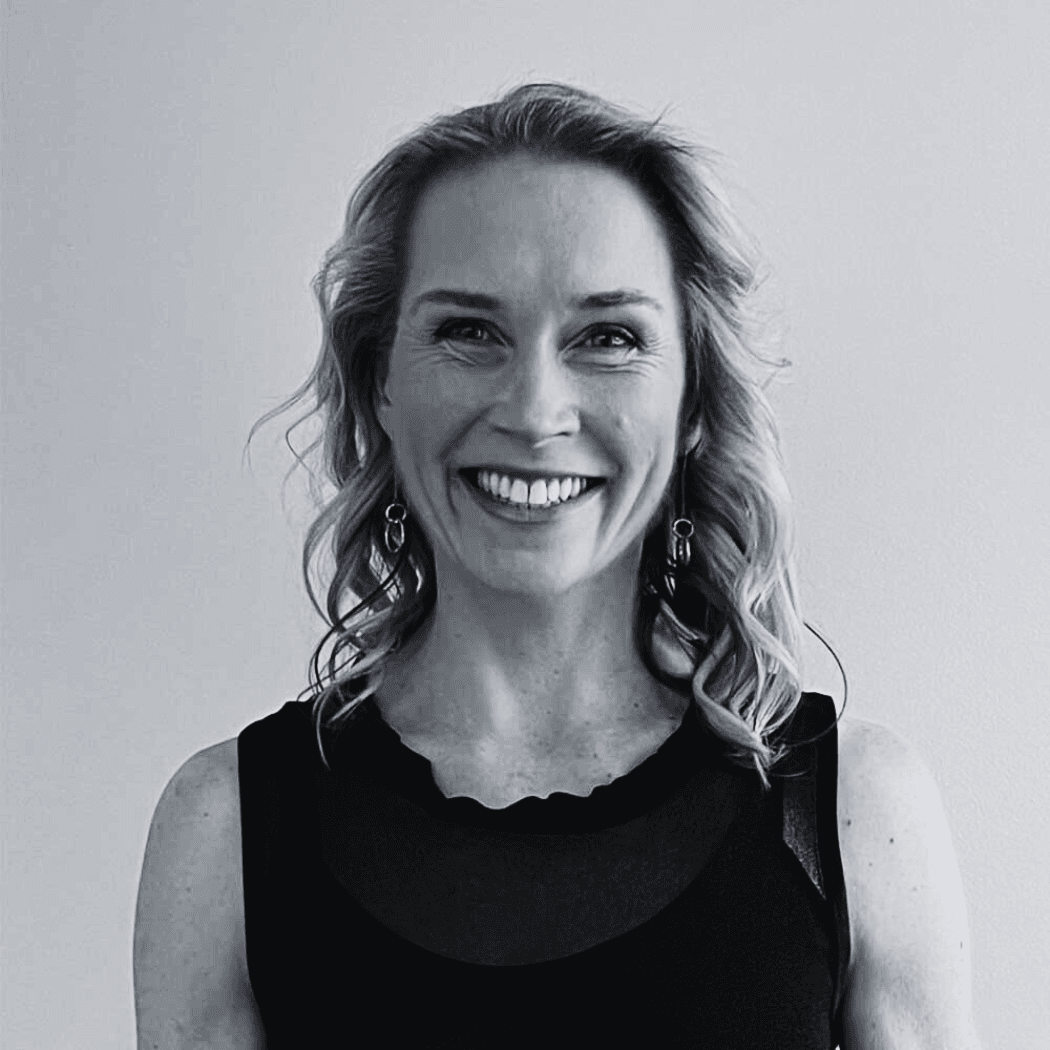
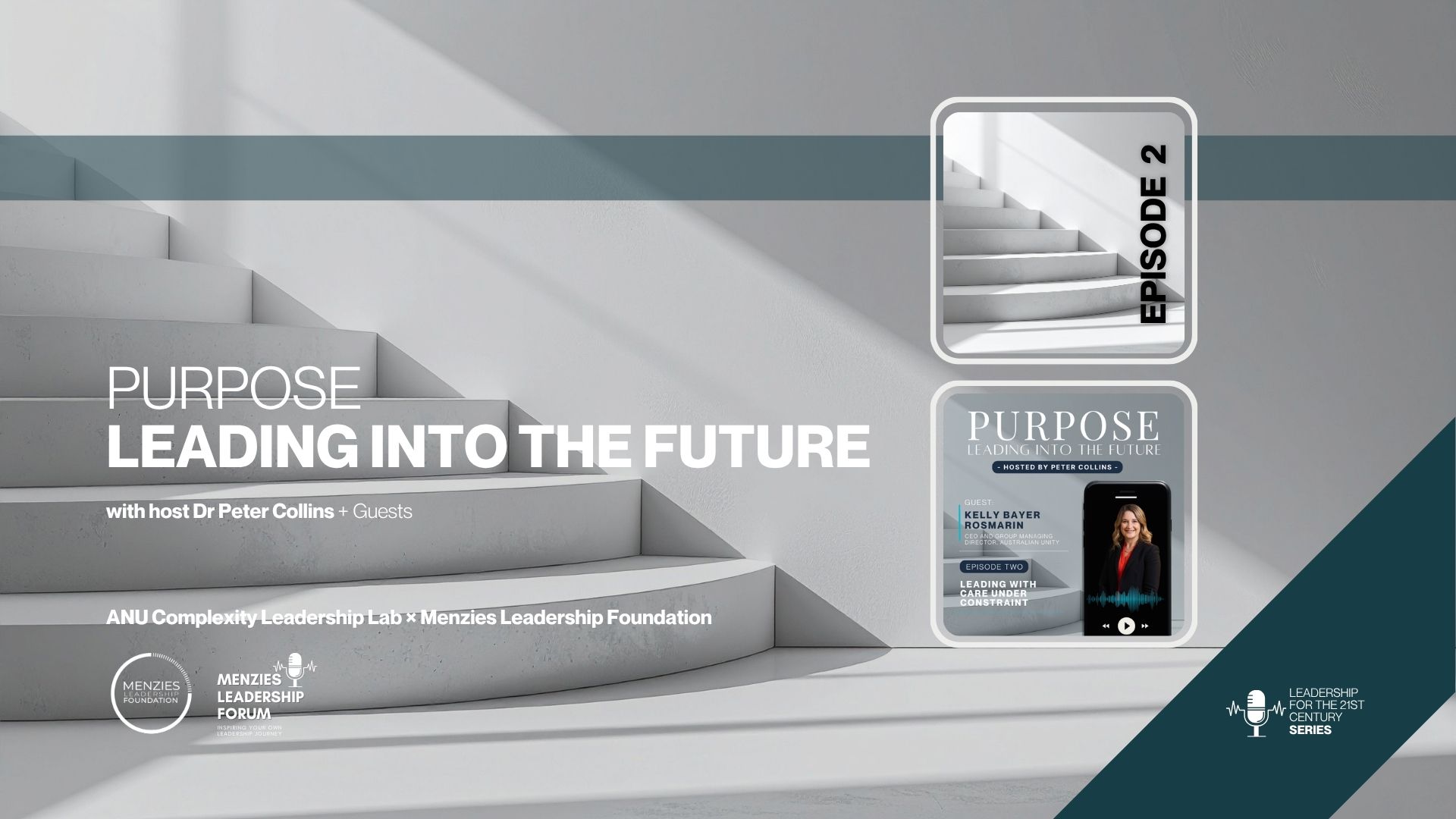
In Episode 2 of Purpose: Leading into the Future, Kelly Bayer Rosmarin — CEO of Australian Unity — explores what it means to lead in environments where responsibility is deeply human, and where outcomes shape not just organisations, but lives.
Building on the series’ central premise — that leadership is a practice of guardianship — this conversation moves into one of the most demanding contexts of all: health, care and wellbeing.
Purpose as the driver of potential
For Kelly, purpose is not abstract. It is anchored in a simple but powerful idea: the fulfilment of potential.
Whether it is an individual, a team, or an entire system, leadership is about enabling something to become more than it is today.
“What drives me is all about potential fulfilment,” she explains — a through-line that has shaped her leadership across banking, telecommunications and now health and care.
But potential is not realised in easy conditions.
It is realised in complexity — in the hard work of solving problems, navigating constraints, and staying committed when progress is uncertain.
This is where purpose becomes critical.
It sustains effort.
It guides decisions.
And it gives meaning to the work when outcomes are not immediate.
A system built around wellbeing
At Australian Unity, this purpose is expressed through a clear and expansive ambition:
Supporting real wellbeing for as many Australians as possible — across health, wealth and care.
What makes this distinctive is not just the breadth, but the integration.
Rather than treating health, financial security and care as separate domains, the organisation operates across the full spectrum — recognising that wellbeing is not singular, but interconnected.
- Health outcomes are shaped by financial stability
- Financial wellbeing is influenced by life stage and care needs
- Social connection underpins both
This reflects a deeper shift in leadership thinking — away from siloed services, and toward systems-level responsibility.
Measuring what matters
A defining feature of Kelly’s approach is the insistence that purpose must be measurable.
Through a Community and Social Value Framework and a national Wellbeing Index, Australian Unity seeks to quantify impact — not just in financial terms, but in human outcomes.
This changes the nature of decision-making.
Every choice can be tested against two questions:
- Is it financially sustainable?
- Does it improve wellbeing?
This dual lens removes ambiguity. It aligns strategy with purpose, and ensures that intent translates into measurable impact.
It also reinforces a broader insight from the series: purpose is not just a guiding idea — it is a decision-making framework.
The human reality behind the system
Yet data alone cannot capture the full picture.
Kelly brings the conversation back to the lived experience of care — particularly in aged care, where the stakes are deeply personal.
Around 10% of residents receive no visitors.
In this context, leadership is not just about service delivery — it is about dignity, connection and meaning.
“If you can help someone smile… feel a sense of companionship… that’s adding value beyond the primary care level.”
This reframes impact.
It is not just measured in services provided, but in human experience — in moments of connection that restore dignity and belonging.
From micro actions to system change
What is striking is how purpose operates at multiple levels simultaneously.
At the micro level, it shows up in everyday behaviours:
- Spending more time with a customer
- Going the extra mile in care
- Acting with warmth, honesty and empathy
At the macro level, it shapes system design:
- Investing in social infrastructure
- Integrating health, wealth and care solutions
- Partnering with government to improve outcomes
This duality is critical.
Purpose is not only expressed in strategy — it is enacted in behaviour.
And when both align, organisations create impact that extends far beyond their immediate boundaries.
Leading through constraint
The health and care system is not a neutral environment.
It is under pressure — from ageing populations, rising demand, workforce strain and funding constraints.
Kelly is clear about the scale of the challenge:
In the next 20 years, the number of Australians entering their 80s will triple.
This is not a distant issue. It is a structural shift that will redefine how care is delivered, funded and experienced.
In this context, leadership requires:
- Clarity — understanding what matters most
- Trade-off discipline — balancing competing needs
- System thinking — recognising interconnected impacts
Purpose does not remove these tensions.
But it provides a way to navigate them.
Reframing wellbeing as connection
One of the most powerful insights in the episode is the role of connection.
Despite increased digital connectivity, loneliness is rising — particularly among younger generations.
This reveals a deeper truth:
Wellbeing is not just about access to services.
It is about belonging.
Kelly’s response is both simple and profound:
- Encourage intergenerational connection
- Create opportunities for community engagement
- Rebuild social bonds through everyday actions
This shifts leadership beyond institutional boundaries — into the social fabric itself.
Purpose in moments of crisis
Purpose is most visible not in stability, but in disruption.
Drawing on experiences across banking, telecommunications and health, Kelly reflects on how organisations respond to crisis — from financial shocks to cyber attacks and national emergencies.
In these moments, purpose becomes a unifying force.
It aligns teams.
It focuses effort.
And it drives people to go beyond what is required.
“The key to recovery is purpose… it gives people the energy to show up and do what’s right.”
Paradoxically, some of the strongest cultures are forged in the most difficult conditions.
Leadership beyond the organisation
The conversation also extends into broader societal responsibility.
In addressing rising social division and antisemitism, Kelly emphasises the importance of social cohesion, dialogue and everyday acts of kindness.
Her message is simple:
Leadership is not confined to formal roles.
It is expressed in how we treat one another.
A single act of kindness — a mitzvah — becomes a building block for a more connected, more humane society.
What this means for leadership
This episode deepens the series’ exploration of purpose by placing it in one of its most demanding contexts.
Leadership in essential systems is not abstract.
It is:
- Human
- Relational
- Constrained
- Consequential
And in these environments, purpose becomes more than guidance.
It becomes responsibility in action.
Looking ahead
As Purpose: Leading into the Future continues, this conversation highlights a critical evolution in leadership.
From:
- Strategy → to impact
- Performance → to wellbeing
- Authority → to care
Because the future of leadership will not be defined by those who can simply deliver outcomes.
It will be defined by those who can hold complexity, navigate trade-offs, and act with care — when it matters most.
🎧 Listen to Episode 2 — Leading with Care Under Constraint —Purpose: Leading into the Future podcast series.