Justice at the Edges: What Leadership Means for Women Escaping Violence

“Leadership is standing beside those who are most unseen by the system.”

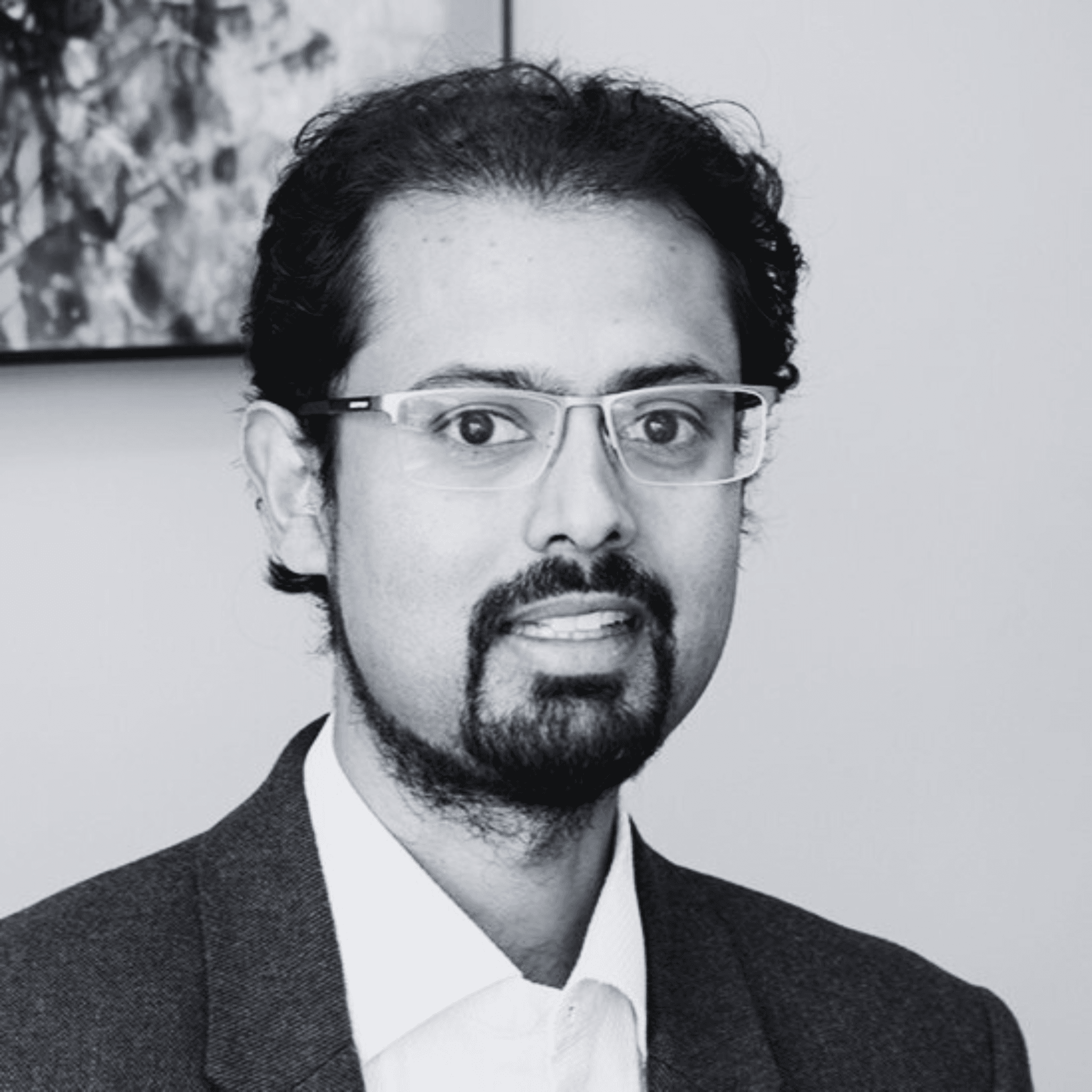
When Kaylee Neil talks about the law, she speaks with the measured clarity of someone who has sat across from it on behalf of others — not in a courtroom, but in the quiet, often overwhelming moments when a woman tries to understand what her rights are and what the system will actually do for her. Kaylee is not a distant observer of family law reform. She works inside it, every day, as a paralegal at a specialist family law firm in Brisbane — holding the gap between what the legal system promises and what it delivers for women escaping domestic violence.

A 2023 Menzies Global Voices Fellow and Bachelor of Laws (Honours) student at Queensland University of Technology, Kaylee has built her legal education in direct relationship with the communities the law is meant to protect. For her, the question that drives everything is not abstract: what does justice actually look like for a woman who has survived violence, and is now navigating a legal system that was not designed with her experience at the centre?

The Property Problem

At the core of Kaylee’s policy work is a problem that is both deeply practical and profoundly unjust. Her policy proposal — developed through the rigorous 2,500-word Global Voices Policy Fellowship — focused on ensuring that women escaping domestic violence can obtain a just and equitable property settlement. It is an issue that sits at the intersection of family law, financial abuse and the long shadow that coercive control casts over a woman’s ability to negotiate on equal footing.

Property settlements are among the most consequential outcomes of relationship breakdown for women who have experienced domestic violence. Yet the legal pathways to a just outcome are often inaccessible, prohibitively expensive, or simply unknown to the women who need them most. Financial abuse — the systematic control of a partner’s access to money, assets and economic decision-making — frequently continues through the legal process itself, as perpetrators use litigation as another instrument of power.

Kaylee’s work as a paralegal gives her daily exposure to this reality. She has seen how the law can be both a tool of liberation and a mechanism of further harm, depending on how it is applied, by whom, and with what resources behind it. Reform, in her view, is not about adding complexity to an already complex system. It is about removing the barriers that mean the most vulnerable women — those with the least financial means, the least legal literacy and the most to lose — are the ones most likely to walk away with less than they are entitled to.

From Brisbane to the United Nations

Kaylee’s selection as the Menzies Foundation Scholar for the CSW68 — the 68th session of the UN Commission on the Status of Women in New York — placed her at the largest annual gathering on gender equality and women’s empowerment in the world. The 2024 session focused on accelerating gender equality by addressing poverty and strengthening institutions through a gender lens — a theme that mapped directly onto the reform questions she was already working through in her policy proposal.

In the halls of the UN and across the parallel events and side sessions that make up the full texture of CSW, Kaylee encountered the global dimensions of the issues she had been grappling with close to home. The barriers facing women in property and financial settlements in Australia are not unique — they are variations on a structural pattern that plays out across legal systems worldwide, shaped by gender inequality, institutional design and the persistent undervaluation of women’s economic contributions within relationships.

The experience sharpened her conviction that domestic reform requires global awareness — that understanding how other jurisdictions have approached these problems, where they have succeeded and where they have fallen short, is essential to building better solutions at home.

The Law as Leadership

What distinguishes Kaylee’s approach is her understanding of legal advocacy as a form of relational leadership. Her volunteerism with the Australian Pro Bono Centre, Young Australians in International Affairs and UN Youth Australia — alongside her Queensland Youth Parliament experience — reflects a consistent orientation toward service that begins with proximity to people, not distance from them. Leadership, for Kaylee, is not performed from a position of authority. It is practised in the moments when you choose to stand in the gap between what someone needs and what the system currently offers.

That orientation matters enormously in the context of family law and domestic violence. Women seeking legal assistance in the aftermath of violence are not looking for advocates who understand their situation in the abstract. They need people who understand the texture of what they have been through, who can navigate institutional complexity on their behalf, and who will not flinch at the places where the system fails.

At the Menzies Leadership Foundation, we believe that this kind of legal advocacy — grounded in lived proximity, driven by justice and committed to the hardest cases — is precisely the kind of leadership Australia’s institutions need more of. Investing in Kaylee’s development is an investment in a future where the law works for everyone who needs it, not just those with the means to access it.

Kaylee Neil is a 2023 Menzies Global Voices Fellow. Applications for the 2026 Global Voices Fellowship are now open. If you are committed to leadership that centres justice, advocates for the unseen, and is willing to do the hard work of reform, we invite you to explore the Fellowship and stay connected with the Menzies Leadership Foundation’s broader emerging leadership community.


Australia’s legal future is being shaped through proximity — by leaders who understand that the most vulnerable cannot be served from a distance.

In a world marked by systemic inequality, financial abuse and legal systems that were never designed with survivors at their centre, the leaders who are making a difference are those willing to stand in the gap — between what the law promises and what it delivers, between institutional complexity and the women who must navigate it alone. They are advocates, not bystanders. They work in communities, not courtrooms.

Through its support of leaders like Kaylee Neil and the emerging generation of justice-driven reformers featured in Global Voices, the Menzies Leadership Foundation is committed to nurturing the kind of leadership that our times demand — leadership that is relational, grounded in lived proximity, and capable of removing the barriers that keep the most vulnerable from what they are entitled to.

If you are committed to leadership that centres justice, advocates for the unseen, and is willing to do the hard work of reform, we invite you to stay connected with the Menzies Leadership Foundation and the work advancing purpose-driven leadership in Australia and beyond.

Related Posts

Natasha Eskinja

Digital Communications Coordinator

Natasha is driven by a profound passion for both creativity and analytics, a synergy that fosters authentic storytelling in the digital realm with both innovation and integrity. 

Throughout her career, she has consistently integrated the overarching marketing and communications narrative with the emotional connections of audiences. She is currently pursuing a Certificate in Society and the Individual from Flinders University, furthering her exploration of human behaviour and the critical importance of connectedness between organisations, individuals, and communities.

LinkedIn | natasha.eskinja@menziesfoundation.org.au

Sarah Jenkins

Strategic Communications Manager

Sarah has more than 18 years’ experience in communications and marketing leadership across a range of sectors.

Communications strategy and organisational growth is a continuing theme in Sarah’s career. Most recently, she leads the development of a Leadership Movement, evaluated by Menzies Viral Co-efficient Model; a contribution to the NFP. 

Sarah’s early career centred around best practice in marketing and communications which later culminated into the establishment of her very own agency. This work extensively spanned across PR, traditional media, event management, strategy, digital marketing, graphic design and business development consultancy. 

In 2019, Sarah joined the lean and robust team at the Menzies Foundation. She has since crafted the Foundation’s narrative and communication strategy. The development of this strategic communications platform is essential for ‘movement building’ and requires a strong strategic, management and communication skills set. Sarah has brought so much to this important work, which sits at the forefront of communication practice. 

Sarah continues to contribute to the NFP sector through her commitment to Purpose; as she reflects on her own leadership, builds her own leadership capability and contributes to the greater good. 

LinkedIn | sarah.jenkins@menziesfoundation.org.au | 0401 880 071

Rohan Martyres

Director, Strategy and Partnerships

Rohan has 15 years’ experience in facilitating cross-sector collaborations to address complex social and health challenges.  He has worked with the World Economic Forum in Australia, led an international conflict resolution field team in Nepal, and directed a 10-year £40m initiative to reduce health inequity in London.

Most recently, Rohan was Major Grants Development Manager at the Ian Potter Foundation.  He refined the foundation’s major grants strategy, and co-developed a series of large scale initiatives, including joint philanthropic-government funding for a new national organization to support place-based approaches across Australia.

Rohan has held several non-executive roles, including with an international NGO and with London Funders, the peak body of independent foundations in London.  He holds several qualifications including a graduate degree in innovation and strategy from the Judge Business School, University of Cambridge.

When Rohan isn’t exploring Melbourne’s creeks with his partner and 6yo daughter, he’s working on his currently weak Australian accent (after 15 years in the UK).

LinkedIn | rohan.martyres@menziesfoundation.org.au | 0404 505 954

Trudy Morrison

Operations Manager

A marketing and communications specialist with over 20 years experience in government, corporate and consumer marketing, Trudy brings her adaptive and organisational project management skills to the Menzies Foundation team. 

With a BA degree in Public Relations, Trudy began her career with the City of Melbourne and in magazine publishing, before moving into marketing communications consulting. She has worked in strategic marketing leadership roles with retail brands and enjoys juggling many projects and tasks simultaneously. Her skills were further enhanced when managing her own communications business representing industries across private education, financial services, aviation, government and the health industry. 

Trudy is passionate about leadership and all people being encouraged to reach their full potential through research and educational initiatives and opportunities throughout Australia. A skilled and accomplished writer and editor Trudy is enthusiastic about bringing her variety of skills to the Menzies Foundation team. 

LinkedIn | trudy.morrison@menziesfoundation.org.au | 0402 361 878

Liz Gillies

Chief Executive Officer

Liz Gillies has had over 25 years experience in a range of fields focused on initiatives for social impact. She has held roles in multiple sectors and academia.

In 2018, Liz was appointed CEO of the Menzies Foundation which aspires to build a leadership movement that supports Australians to pivot to purpose, build their leadership capability and contribute to the ‘greater good’.

Liz joined the Melbourne Business School in 2009 and was instrumental in establishing the Asia Pacific Social Impact Centre (APSIC) and The Centre for Ethical Leadership. In November 2011 she was appointed as research fellow to lead a partnership focused on strategic philanthropy which culminated in the release of the reports: Philanthropy: Towards a Better Practice Model (2018) and the Philanthropy: The Continued Journey to Real Impact and better Practice (2021).

Liz has extensive governance experience, having served on the Board of the Publish Galleries Association of Victoria, Social Firms Australia, Uniting Care Community Options, United Way Australia and the Development Committee of the Towards a Just Society Foundation. She is currently on the Philanthropy Reference Group of Barmal Bijiril and a Director of Philanthropy Australia.

LinkedIn | liz.gillies@menziesfoundation.org.au | 0416 112 703

Natasha Eskinja

Digital Communications Coordinator

Natasha is driven by a profound passion for both creativity and analytics, a synergy that fosters authentic storytelling in the digital realm with both innovation and integrity. 

Throughout her career, she has consistently integrated the overarching marketing and communications narrative with the emotional connections of audiences. She is currently pursuing a Certificate in Society and the Individual from Flinders University, furthering her exploration of human behaviour and the critical importance of connectedness between organisations, individuals, and communities.