

Complex challenges rarely belong to one person. In a school, an organisation or a community, outcomes emerge from the interactions between many people, each holding different knowledge, responsibilities, relationships and perspectives. Yet leadership is still often imagined as something concentrated in an individual: the principal, the executive or the person with formal authority.
In complex systems, that is not enough. One of the questions being explored through the ANU Leadership & Complexity Lab, supported by the Menzies Leadership Foundation, is what individuals, collectives and wider systems need in order to navigate complexity and shape better futures. Increasingly, that means looking beyond the capability of individual leaders and examining the conditions that enable people to understand challenges, act and learn together.
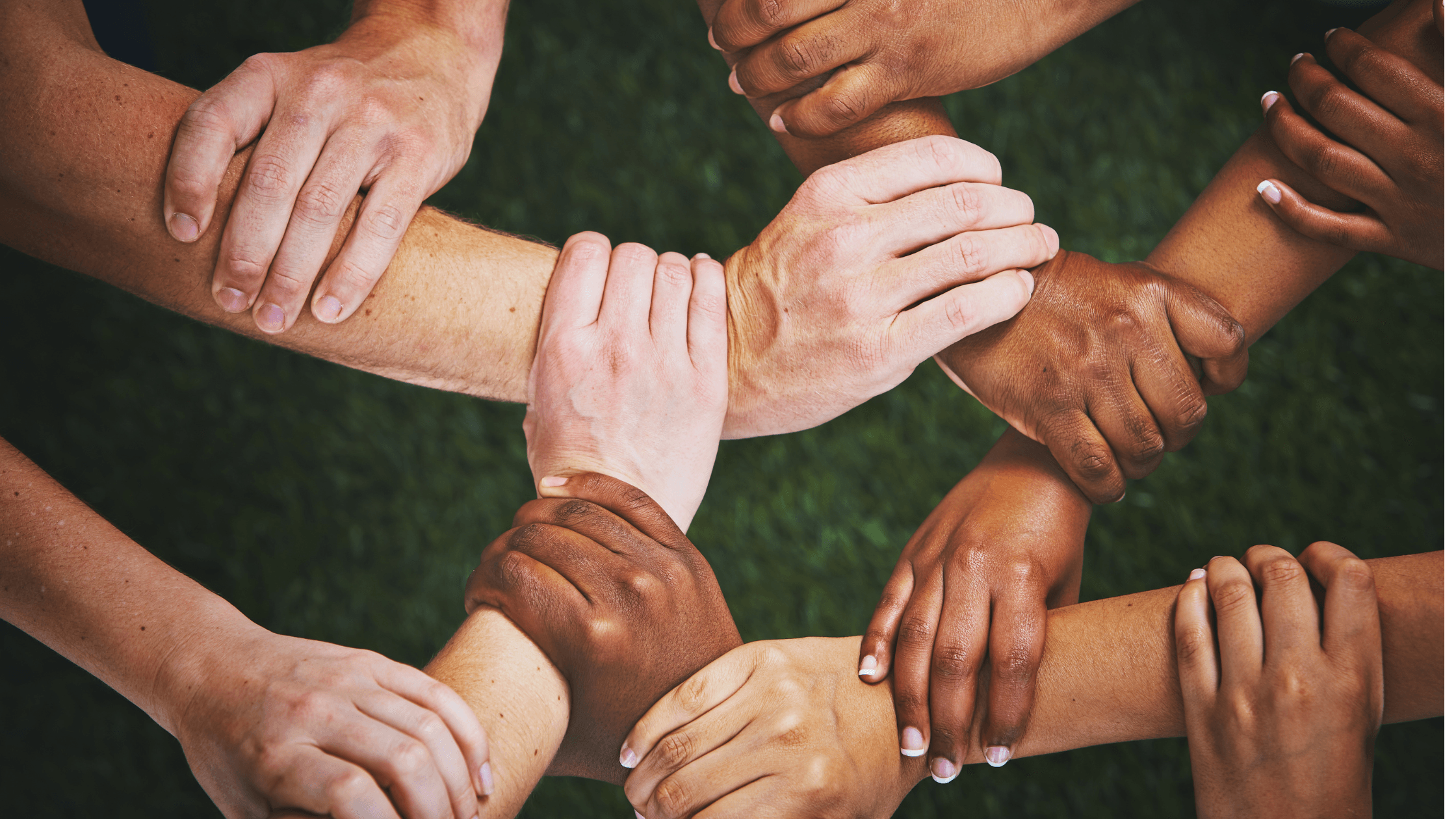
At the heart of this inquiry is collective efficacy: the shared belief that, together, people have the capacity to make a meaningful difference.
More than a strong team
Collective efficacy can sound like another term for teamwork, but it goes further. A team may have positive relationships and enjoy working together while still feeling unable to influence the challenges around it. Equally, people do not need to agree on everything to have a strong sense of collective efficacy.
What matters is whether people have experienced themselves as capable of acting together: whether they can make sense of a problem collectively, draw on one another’s knowledge, coordinate action, test different approaches and learn from what happens next. Over time, those experiences shape whether a group believes its combined effort can influence outcomes.
That belief matters because it changes behaviour. When people feel they have agency together, they are more likely to contribute ideas, raise concerns, persist when an initial approach fails and take responsibility beyond the boundaries of their own role. When that belief is absent, even highly capable people can become cautious, isolated or resigned.
Leadership capability exists at more than one level
The Lab’s current research is developing a multi-level framework for leadership capability in complexity, examining what is required not only of individuals, but of collectives and systems. Four interdependent domains are emerging through this work:
- Strategic Sensemaking;
- Relational Trust & Collective Capacity;
- Learning & Adaptation;
- and Ethical Purpose.
Collective efficacy sits naturally within this broader picture. It is closely connected to relational trust and collective capacity, but it also depends on the other domains. People need to make sense of what is happening around them, understand what they are collectively trying to achieve, learn from feedback and adapt their approach as circumstances change.
This is important because complexity does not present leaders with discrete problems that can always be solved through expertise or authority. Workforce pressures may intersect with culture and wellbeing. Student engagement may be shaped by family, community and policy settings. Technology, organisational structures, resources and relationships influence one another, often in ways that are difficult to predict in advance.
No individual can see the whole system, and no individual leader — regardless of their experience or expertise — can hold all the knowledge required to respond to it. The leadership task therefore shifts from simply having the right answers to creating the conditions in which people can understand challenges together, coordinate action and learn from the system as it responds.
Collective efficacy has to be experienced
Collective efficacy cannot simply be announced. Telling a group that they are empowered does not make them feel capable of influencing what happens; confidence develops through experience.
People begin to believe in their collective capacity when they can see that speaking up matters, when different perspectives change the way a problem is understood, when coordinated effort produces progress and when setbacks become opportunities to learn rather than occasions for blame.
Several conditions help make this possible.
- Shared purpose gives people clarity about what they are trying to achieve together.
- Relational trust allows them to speak honestly, challenge assumptions and admit uncertainty.
- Clarity helps people understand their own responsibilities while also seeing how those responsibilities connect with the work of others.
- Agency gives people meaningful opportunities to shape action,
- While visible learning enables teams to recognise what is changing, what is not working and where adaptation is required.
These are not separate ingredients to be applied mechanically. They reinforce one another. Trust makes learning safer; learning strengthens confidence; purpose gives collective action direction; and the experience of making progress together can build the belief that further change is possible.
None of these conditions removes complexity. They give people a stronger foundation from which to work within it.
From developing leaders to developing systems
This raises an important question about how we approach leadership development. Much leadership development understandably focuses on individuals, strengthening their knowledge, confidence, judgement and skills. But if the challenges leaders face are systemic, strengthening individuals alone can only take us so far.
A highly capable leader returning to an environment in which people cannot collaborate, information does not flow, authority is tightly held or failure cannot be discussed openly will quickly encounter the limits of individual capability. The deeper question becomes whether we are developing leaders while also developing the relationships, structures and learning conditions that allow leadership to happen across a system.
This shift is visible across several strands of the Lab’s work. Research into system leadership and education reform is examining how feedback loops, relationships and interactions within and beyond education shape reform, including the capabilities and conditions required to work across boundaries and generate shared understanding. Related research into organising for learning at scale is exploring how governance structures, professional norms, organisational routines and feedback loops can enable — or constrain — an education system’s capacity to learn, adapt and transform.
Together, these projects point towards a broader understanding of leadership: not simply as something exercised by people in senior roles, but as a capability shaped by relationships, institutions and the architecture of the system itself.
Learning through schools
Schools provide a particularly powerful environment in which to explore these ideas because they are profoundly relational systems. What happens within them emerges through the interactions of educators, students, families, leaders, support staff, policy settings and communities.
The Lab’s work with Rising Team for Schools reflects this focus. The initiative is being developed as a scalable, evidence-informed platform for strengthening leadership, collaborative capacity and collective efficacy, with the current work focused on supporting early adopters, strengthening the Australian implementation and building research, partnership and investment pathways.
A related workforce sustainability pilot will extend this thinking by examining how digital workforce diagnostics, strategic planning and team-based interventions influence leadership practice, decision-making and employees’ experience of work across participating schools.
Importantly, this work is not based on the assumption that technology or data will produce change on their own. Workforce diagnostics may help leaders identify patterns in retention, workload or staff experience, but information still needs to be interpreted and acted upon. Teams need the relational capacity to discuss difficult findings honestly, bring different perspectives into the conversation and coordinate what happens next.
In this sense, collective efficacy can help bridge the space between knowing and acting.
What does collective capacity look like in practice?v
Strong collective efficacy does not mean everyone feels confident all the time, nor does it mean that problems become easy. It can be seen instead in the way people approach the work.
Teams with stronger collective efficacy are more likely to talk about difficult challenges as our problem, rather than something another person or department needs to fix. They can use evidence without immediately turning it into blame, seek out perspectives they may be missing and remain engaged when the first solution does not work.
They are also able to learn. This is particularly important in complex environments, where action rarely produces perfectly predictable results. Teams need ways of noticing what is changing, interpreting feedback and adapting their approach without losing sight of the purpose that brought them together in the first place.
Over time, the belief that “we can do something about this” becomes more than a feeling. It becomes part of the system’s capacity to respond and adapt.
Leadership is creating the conditions
For formal leaders, this changes the central question from How do I solve this? to What conditions will help us work on this together?
That might mean examining whose knowledge is missing from a conversation, giving people greater authority to act, creating safer ways to challenge decisions or making more time for reflection and learning. It may mean improving feedback loops so that leaders can better understand how decisions are being experienced elsewhere in the system. It can also mean helping teams see evidence that their collective effort is having an effect.
Importantly, distributing leadership does not mean abandoning accountability. Shared leadership still needs structure, with clarity about who makes decisions, who holds responsibility and how action will be coordinated. The opportunity is not to make leadership vague, but to broaden where leadership capability exists and strengthen the connections between its different levels.
Building the capacity to lead together
The Lab’s work points towards leadership as a dynamic capability spanning individuals, collectives and systems. Strategic sensemaking helps people understand what is changing around them. Relational trust and collective capacity enable people to work across difference and act together. Learning and adaptation allow systems to respond to feedback, while ethical purpose provides orientation about what that adaptation should ultimately serve.
Collective efficacy is an important part of this picture because it shapes whether people experience themselves as participants in change or simply as recipients of it.
The future of leadership therefore cannot only be about developing exceptional individuals. It must also be about strengthening our capacity to understand, act and learn together.
When people genuinely believe their collective effort can make a difference, it changes what they are prepared to attempt, what they are willing to learn and how long they are prepared to remain engaged with difficult work.
And in conditions of complexity, that collective capacity may be one of our most important leadership resources.
Inside the Complexity Lab
This article is part of Inside the Complexity Lab, a Menzies Leadership Foundation series exploring the research, ideas and practical insights emerging from the ANU Leadership & Complexity Lab.
The Lab’s purpose is to advance the understanding and practice of leadership at the intersection of people, technology, society and the environment, strengthening the capacity of individuals, collectives and systems to navigate complexity and shape safe, sustainable and hopeful futures.
Across this series, we explore what that means in practice — from ethical purpose and collective capacity to learning, adaptation, systems leadership and the evolving relationship between human and artificial intelligence.