Leading Reconciliation and New Approaches to Indigenous Engagement

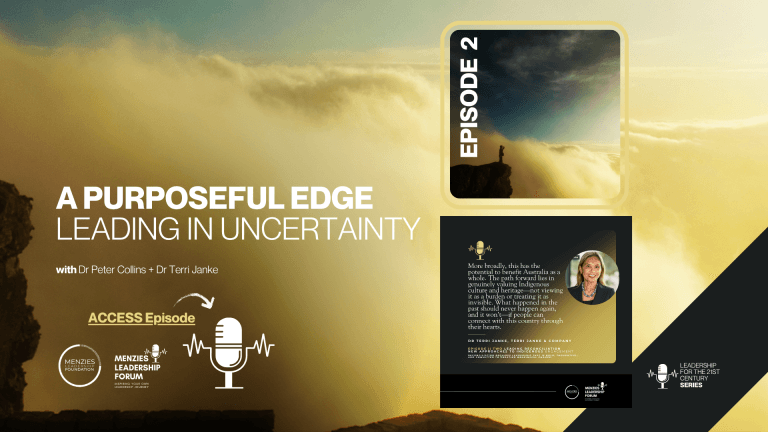
Episode 2, A Purposeful Edge: Leading in Uncertainty

When heritage is treated as expendable and inclusion is seen as optional, leadership must stand for something more enduring. 

In this episode of A Purposeful Edge: Leading in Uncertainty, Dr Peter Collins is joined by Dr Terri Janke, a Wuthathi, Yadhaigana and Meriam woman, lawyer and global expert on Indigenous Cultural and Intellectual Property. Together they explore what true reconciliation demands from leaders today and how ‘blak excellence’ can redefine the future of Australia. 

Terri doesn’t just speak about reconciliation. She embodies it. 

From her early days studying law, through her work with the Australia Council and later founding her own law firm, Terri has been guided by one consistent principle: culture is not a relic of the past — it’s a foundation for justice, identity and leadership. 

“This knowledge defines people. It comes from place. It has reverence. It needs to be protected, not exploited.” 

She recalls how the 1992 Mabo decision restored her faith in the legal system, a turning point that helped her return to university and begin a career centred on justice for First Nations peoples. What followed was not only the creation of a successful legal firm, but a movement with her work empowering Indigenous artists, communities and knowledge-holders to assert their rights, tell their stories and reclaim their narratives. 

But the road has not been without heartbreak. In 2020, the world watched as Rio Tinto destroyed Juukan Gorge, an Indigenous heritage site with 46,000 years of history. It was a legal act, but not a just one. Terri helped author the ‘Never Again’ report for the parliamentary inquiry, a contribution that exposed the deep failings of current heritage protection laws and called for a new way forward. 

“You can’t get that back. When sites are destroyed, it’s not just physical — it’s spiritual, cultural and personal.” 

The way forward, she argues, is not complex. It starts with walking together with genuine listening, power-sharing and an unwavering commitment to Indigenous-led solutions. This means moving beyond deficit-based language like ‘closing the gap’ and embracing frameworks that celebrate Indigenous agency, knowledge and leadership. 

At the heart of Terri’s vision is the concept of blak excellence, a bold reclaiming of pride, potential and power. Not as imitation, not as assimilation, but as a self-determined pathway to cultural and economic empowerment. 

“Too often our goals were set for us. Now we must set them for ourselves.” 

For Terri, empowerment means more than inclusion. It means Indigenous people creating their own businesses, governing their cultural expressions and leading on the issues that affect them, not as a special category, but as rightful custodians and contributors to the nation. 

It also means reshaping how the rest of Australia views success. Through the lens of black excellence, she challenges government, business and civil society to embrace Indigenous knowledge systems as a strength and not a risk. To rethink how they partner, who they listen to and what values they uphold. 

“If we make it, we bring others with us. That’s what black excellence does — it doesn’t leave people behind.” 

Dr Peter Collins and Terri discuss how reconciliation must go beyond symbolism. It must be lived, practiced and legislated. And it must centre Indigenous voices in parliament, policy and the boardroom. Terri’s work is a blueprint for that future, where legal empowerment is matched with cultural integrity and communities are no longer left behind but lifted up. 

Listening to Terri is like walking along an ancient track, one worn smooth by centuries of wisdom and renewed by every new footstep. Her words invite us to travel forward together, not as an act of charity, but of justice. And not just for Indigenous people, but for the nation. 

This is leadership that does not flinch from truth. This is leadership that moves us forward — respectfully, powerfully and with heart. 

_________________________________________________________________________________ 
🎧 Tune into the full conversation between Dr Peter Collins and Dr Terri Janke to explore how courageous leadership can transform reconciliation — and how cultural integrity, empowerment and black excellence can lead us to a more just future. 
_________________________________________________________________________________ 

 

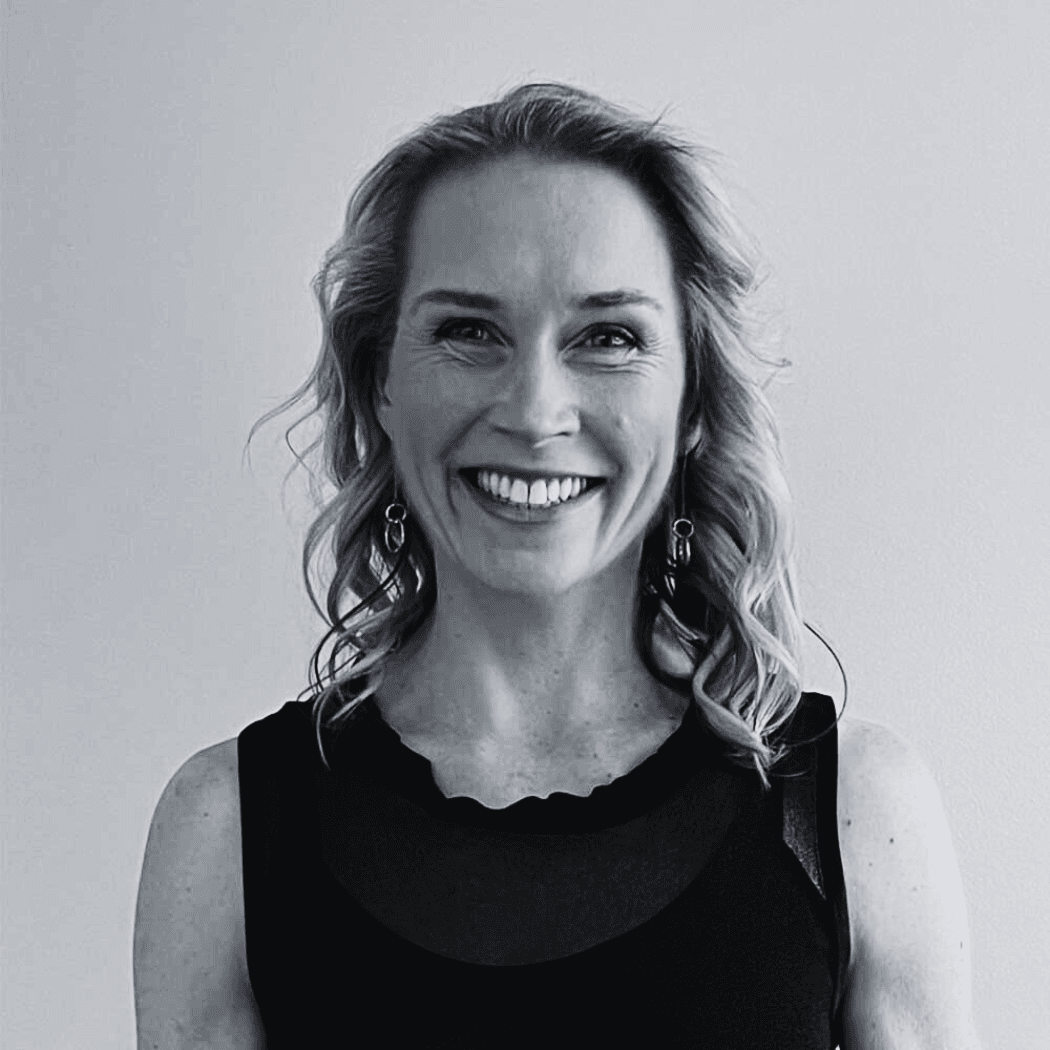
Natasha Eskinja

Digital Communications Coordinator

Natasha is driven by a profound passion for both creativity and analytics, a synergy that fosters authentic storytelling in the digital realm with both innovation and integrity. 

Throughout her career, she has consistently integrated the overarching marketing and communications narrative with the emotional connections of audiences. She is currently pursuing a Certificate in Society and the Individual from Flinders University, furthering her exploration of human behaviour and the critical importance of connectedness between organisations, individuals, and communities.

LinkedIn | natasha.eskinja@menziesfoundation.org.au

Sarah Jenkins

Strategic Communications Manager

Sarah has more than 18 years’ experience in communications and marketing leadership across a range of sectors.

Communications strategy and organisational growth is a continuing theme in Sarah’s career. Most recently, she leads the development of a Leadership Movement, evaluated by Menzies Viral Co-efficient Model; a contribution to the NFP. 

Sarah’s early career centred around best practice in marketing and communications which later culminated into the establishment of her very own agency. This work extensively spanned across PR, traditional media, event management, strategy, digital marketing, graphic design and business development consultancy. 

In 2019, Sarah joined the lean and robust team at the Menzies Foundation. She has since crafted the Foundation’s narrative and communication strategy. The development of this strategic communications platform is essential for ‘movement building’ and requires a strong strategic, management and communication skills set. Sarah has brought so much to this important work, which sits at the forefront of communication practice. 

Sarah continues to contribute to the NFP sector through her commitment to Purpose; as she reflects on her own leadership, builds her own leadership capability and contributes to the greater good. 

LinkedIn | sarah.jenkins@menziesfoundation.org.au | 0401 880 071

Rohan Martyres

Director, Strategy and Partnerships

Rohan has 15 years’ experience in facilitating cross-sector collaborations to address complex social and health challenges.  He has worked with the World Economic Forum in Australia, led an international conflict resolution field team in Nepal, and directed a 10-year £40m initiative to reduce health inequity in London.

Most recently, Rohan was Major Grants Development Manager at the Ian Potter Foundation.  He refined the foundation’s major grants strategy, and co-developed a series of large scale initiatives, including joint philanthropic-government funding for a new national organization to support place-based approaches across Australia.

Rohan has held several non-executive roles, including with an international NGO and with London Funders, the peak body of independent foundations in London.  He holds several qualifications including a graduate degree in innovation and strategy from the Judge Business School, University of Cambridge.

When Rohan isn’t exploring Melbourne’s creeks with his partner and 6yo daughter, he’s working on his currently weak Australian accent (after 15 years in the UK).

LinkedIn | rohan.martyres@menziesfoundation.org.au | 0404 505 954

Trudy Morrison

Operations Manager

A marketing and communications specialist with over 20 years experience in government, corporate and consumer marketing, Trudy brings her adaptive and organisational project management skills to the Menzies Foundation team. 

With a BA degree in Public Relations, Trudy began her career with the City of Melbourne and in magazine publishing, before moving into marketing communications consulting. She has worked in strategic marketing leadership roles with retail brands and enjoys juggling many projects and tasks simultaneously. Her skills were further enhanced when managing her own communications business representing industries across private education, financial services, aviation, government and the health industry. 

Trudy is passionate about leadership and all people being encouraged to reach their full potential through research and educational initiatives and opportunities throughout Australia. A skilled and accomplished writer and editor Trudy is enthusiastic about bringing her variety of skills to the Menzies Foundation team. 

LinkedIn | trudy.morrison@menziesfoundation.org.au | 0402 361 878

Liz Gillies

Chief Executive Officer

Liz Gillies has had over 25 years experience in a range of fields focused on initiatives for social impact. She has held roles in multiple sectors and academia.

In 2018, Liz was appointed CEO of the Menzies Foundation which aspires to build a leadership movement that supports Australians to pivot to purpose, build their leadership capability and contribute to the ‘greater good’.

Liz joined the Melbourne Business School in 2009 and was instrumental in establishing the Asia Pacific Social Impact Centre (APSIC) and The Centre for Ethical Leadership. In November 2011 she was appointed as research fellow to lead a partnership focused on strategic philanthropy which culminated in the release of the reports: Philanthropy: Towards a Better Practice Model (2018) and the Philanthropy: The Continued Journey to Real Impact and better Practice (2021).

Liz has extensive governance experience, having served on the Board of the Publish Galleries Association of Victoria, Social Firms Australia, Uniting Care Community Options, United Way Australia and the Development Committee of the Towards a Just Society Foundation. She is currently on the Philanthropy Reference Group of Barmal Bijiril and a Director of Philanthropy Australia.

LinkedIn | liz.gillies@menziesfoundation.org.au | 0416 112 703

Natasha Eskinja

Digital Communications Coordinator

Natasha is driven by a profound passion for both creativity and analytics, a synergy that fosters authentic storytelling in the digital realm with both innovation and integrity. 

Throughout her career, she has consistently integrated the overarching marketing and communications narrative with the emotional connections of audiences. She is currently pursuing a Certificate in Society and the Individual from Flinders University, furthering her exploration of human behaviour and the critical importance of connectedness between organisations, individuals, and communities.